CLEVELAND — Hopkins is getting a major makeover, and the changes could reach far beyond the people boarding airplanes. Families, airport employees, local businesses, Uber and Lyft drivers, Turo hosts, and delivery workers all have a stake in how Cleveland’s airport is rebuilt.
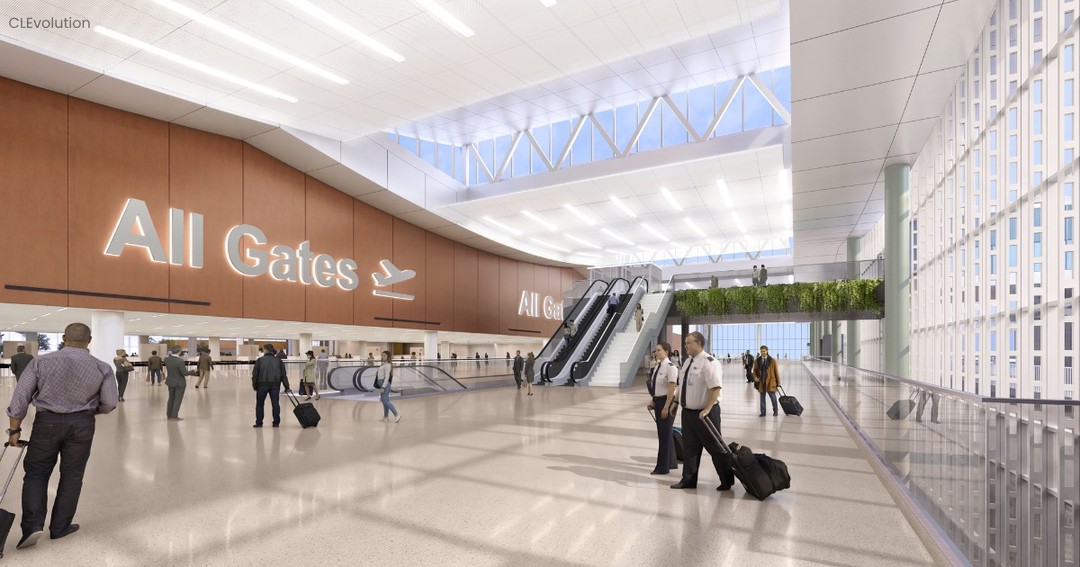
The project, called CLEvolution, promises a more modern airport experience. New renderings show bright passenger spaces, redesigned roadways, and improved connections between the terminal and ground transportation. But what is actually happening, who is responsible, and how will construction affect your next trip or workday?
What is Cleveland building?
Hopkins will remain at its existing location. The plan rebuilds facilities in phases while the airport continues operating.
La Fiebre 101.7 FM
 La Fiebre 101.7 FMLa música y la voz de Cleveland.ESCUCHA EN VIVO
The airport’s first-phase announcement identified approximately $1.6 billion in landside improvements, including a new Gold Lot, parking garage, ground transportation center, relocated RTA station, and terminal headhouse—the building where passengers check in and move toward screening. The approximately $1.1 billion headhouse was announced with a 2032 target and additional airline funding approvals required. Source: CLE’s project announcement.
A broader October 2026 vision goes further. NEOtrans reporter Ken Prendergast describes two proposed concourses with about 40 gates replacing three active concourses with 46 gates, plus an on-site rental-car facility. His reporting characterizes that longer-term, conceptual build-out as roughly $3 billion over two decades. That scope is different from the $1.6 billion landside program. Read the latest NEOtrans report.
Future designs, financing, and schedules can change. A rendering shows a proposed direction; it does not mean every building is already funded or under construction.

Why does Hopkins need this?
A better airport should make ordinary tasks easier: finding the correct entrance, checking a bag, getting through screening, reaching a gate, and meeting a ride afterward. Updating individual spaces helps, but rebuilding the connections between them can address problems that smaller renovations leave behind.
Hopkins handled 10,003,833 passengers in 2025, compared with 10,173,861 in 2024, according to airport statistics. Modernization does not depend on claiming that every year breaks a record. Busy departure periods and groups of arriving flights can strain particular spaces even when annual traffic falls slightly. Source: airport passenger figures.
For visitors, the airport is an early impression of Cleveland. For residents, it is part of leaving home and coming back. For workers, reliable access is a daily necessity. The case for investment should rest on improving those experiences, maintaining facilities, and preparing responsibly for future demand.
When will the changes happen?
The Gold Lot groundbreaking took place July 1, 2026. The airport says it will add approximately 1,600 parking spaces. Source: groundbreaking announcement. The current project dashboard lists planned completion in March 2027.
The new garage, ground transportation center, and relocated RTA station have an announced 2029 target. The garage is planned for approximately 6,000 spaces. Source: airport partner announcement. The headhouse target is 2032; later concourse work requires separate decisions.
Parking comes first because the airport needs replacement capacity before existing facilities are removed for later construction. These dates are targets, not guarantees. Travelers should follow specific closure notices rather than assume the entire campus changes at once.
Some improvements are already open
The larger rebuild is years away, but passengers have already seen smaller changes. In May 2026, Hopkins opened a revamped Central Checkpoint with four screening lanes instead of two and more queue space. The airport also reported that restrooms opened in November 2025 included its first adult changing station. Source: checkpoint opening announcement.
These improvements illustrate what passengers should expect throughout construction: usable facilities and practical gains along the way. More screening lanes do not guarantee a particular wait time, but current travelers should continue receiving attention while the airport prepares its future buildings.
Who pays for the makeover?
Cleveland’s Department of Port Control describes the airport system as self-supporting, using airport revenues and sources such as airline payments, parking, concessions, rents, and federal grants. It says local tax dollars do not support airport operations or capital development. Source: Port Control FAQs.
That does not make construction free. Airport users generate revenue, and federal grants are public money. Residents should ask how debt will be repaid, which financial assumptions support the work, and whether any future charges will change. This article is not reporting an approved increase in parking or driver fees.
The public also deserves clear explanations when estimates change. A larger number may reflect additional buildings or later phases, rather than the same construction package suddenly becoming more expensive.
The mayor, airport leadership, and City Council
Mayor Justin M. Bibb, Port Control Director Bryant L. Francis, and Council President Blaine A. Griffin are prominent public leaders associated with CLEvolution. Source: project leadership statements. Industry Day materials also identify Airport Development Assistant Director Dennis D. Kramer and Office of Equal Opportunity Director Tyson T. Mitchell. Source: Industry Day leadership information.
Council oversight matters. Charles J. Slife chairs Transportation and Mobility, with Joseph T. Jones as vice chair. Griffin chairs Finance, Diversity, Equity and Inclusion, with Jasmin Santana as vice chair. Santana also chairs Development, Planning and Sustainability, while Richard A. Starr chairs Workforce, Education, Training and Youth Development. Source: council committee assignments.
For readers following their representatives, the current 15-member council is:
| Ward | Council member |
|---|---|
| 1 | Joseph T. Jones |
| 2 | Kevin L. Bishop |
| 3 | Deborah Gray |
| 4 | Kris Harsh |
| 5 | Richard A. Starr |
| 6 | Blaine A. Griffin |
| 7 | Austin N. Davis |
| 8 | Stephanie D. Howse-Jones |
| 9 | Kevin Conwell |
| 10 | Michael D. Polensek |
| 11 | Nikki Hudson |
| 12 | Tanmay Shah |
| 13 | Brian Kazy |
| 14 | Jasmin Santana |
| 15 | Charles J. Slife |
Source: council ward directory. Listing a member does not imply endorsement of every project component or a particular vote.
Who is doing the work?
The airport identifies Jacobs for program and construction management, Shook Construction for the Gold Lot, and CLE Connection Group for the parking and public-transportation structure. That group includes Gilbane Building, Donley’s, Next Generation Construction, Independence Excavating, Vocon, Pickard Chilton, Osborn Engineering, DESMAN, and GFT. Source: project partners.
The wider program team also lists Paslay Group, Corgan, Connico, DVA Architecture, Robert P. Madison International, McGuiness Unlimited, and Regency Construction Services. Source: CLEvolution team.
For local businesses, the opportunity should be measured through actual contracts, payments, training, and employment. Interested firms can follow the program’s procurement resources. Attending an industry event does not mean a company has received a contract.

Uber and Lyft drivers: time at the curb matters
For drivers, a confusing pickup can mean fuel use, unpaid waiting, a cancellation, or a missed opportunity for another trip. Construction planning needs to consider their workday alongside passenger convenience.
CLE’s current rideshare page identifies Uber and Lyft as authorized services and describes app-coordinated access using the departures or arrivals roadway. Platform instructions provide more detail: Lyft’s CLE guidance identifies cell-phone-lot staging, arrivals pickups, and departures drop-offs. Uber’s driver guidance also describes designated staging and app-directed pickups.
Drivers should check the exact trip instructions, airport signs, and personnel directions. Future construction could change routes or pickup arrangements; no finalized future Uber/Lyft map or guaranteed earnings increase was established in the materials reviewed.
Better organization could make pickups easier. Temporary detours could also add time. Drivers deserve advance maps, adequate staging, accessible pickup arrangements, and app directions that match the road. A 15-minute delay may look small on a construction schedule, but it matters to someone trying to complete several trips.
Turo hosts and guests: different rules apply
Turo’s CLE host guidance lists approved exchanges in the Blue, Brown, Orange, and Red lots and Smart Garage, while prohibiting curbside delivery anywhere on airport property. Source: Turo’s airport instructions.
A future parking change could affect a handoff location. Hosts and guests should confirm the permitted location and current trip instructions before traveling. A new garage or conventional rental-car center does not automatically create a new authorized Turo exchange area.
Clear row information, vehicle photographs, and communication will become especially useful if familiar routes change. Guests should also review any parking responsibilities instead of assuming all airport-related costs are included in one fee.
DoorDash and other delivery drivers need clear access
DoorDash, Uber Eats, Instacart, and parcel couriers may serve airport employees, hotels, offices, or authorized construction-site recipients. Their access needs differ from passenger pickups.
No dedicated DoorDash zone or new delivery privilege was identified in the public project materials reviewed. A customer’s request does not provide access to restricted areas. Deliveries need a lawful meeting point, correct entrance, and reachable recipient.
Construction could create orders, but there is no verified earnings forecast. The useful commitment would be clear delivery instructions and timely entrance updates. Taxis, black cars, hotel shuttles, and other commercial vehicles also need service-specific directions.
What travelers should expect
First-time flyers need understandable signs and visible assistance. Returning travelers should check their route again rather than rely entirely on memory. A changed entrance, parking arrangement, or pickup level can disrupt a familiar routine.
Accessibility must work throughout construction. CLE recommends arranging wheelchair assistance through the airline, preferably in advance. Source: accessibility services. Temporary routes should account for reduced mobility, luggage, children, weather, and the time needed to reach assistance.
RTA remains important for employees and travelers. The current station is on the terminal’s lower level, with Red Line service toward downtown. Source: airport transit information. The planned station relocation does not itself announce a service shutdown; riders should check specific RTA notices.
Before your next airport trip
Check the latest construction updates, confirm your parking choice, and review your airline’s instructions before leaving home. If someone is picking you up, agree on how you will communicate after landing and confirm the correct terminal level and meeting location.
Drivers should distinguish staging from active loading, parking, and delivery access. A passenger may be unfamiliar with the rules, so clear communication helps both sides. Families traveling with children, older relatives, or someone needing assistance should build those needs into the pickup plan.
What Cleveland should keep asking
Will construction stay within its budget? Will drivers receive notices before routes change? Will accessible pathways remain practical? How much work will reach local and minority-owned businesses? Will future charges be explained clearly?
A public progress report could make the project easier to follow by showing each major package’s budget, current completion target, operating changes, and local business participation. When a schedule changes, the explanation should identify what happened and how travelers will be accommodated. These are recommendations for accountability, rather than promises already established by the project.
The same approach should apply to driver feedback. Airport officials and platforms should have a way to correct mismatched pickup instructions quickly. Workers who repeatedly use the campus can identify confusing turns or impractical handoffs before those problems become part of everyone’s routine.
A better terminal also does not guarantee cheaper tickets or new nonstop routes. Airline decisions still depend on demand, competition, aircraft, and operating costs. For families visiting Puerto Rico or relatives elsewhere, improved facilities and available flights are related but separate issues.
Cleveland, what would you fix first: parking, pickup lanes, security, baggage claim, or the walk to your gate? If you drive for an app, share what would make airport trips easier. If you fly, tell us what would improve your next departure or homecoming. Those everyday experiences should help shape how this transformation is delivered.
Based on public records and reporting reviewed through October 15, 2026. Future dates are targets; driver impacts discussed here include analysis. Images are conceptual project renderings. Check current airport and platform instructions before traveling.
YOU SHAPE THE NEWSROOM
What should Cleveland Boricua cover next?
YOUR CLEVELAND MEMORY
Were you there? Add your voice.
Share a memory, a correction, a family photo, or a lead for the next chapter. Every submission goes to the Cleveland Boricua moderation inbox first.
THE COMMUNITY QUESTION