Amy Acton wins the governor’s race, Sherrod Brown returns to the U.S. Senate and Brian Poindexter defeats Max Miller. Here is what the results, Issue 3 and the national shift could mean for Greater Cleveland.
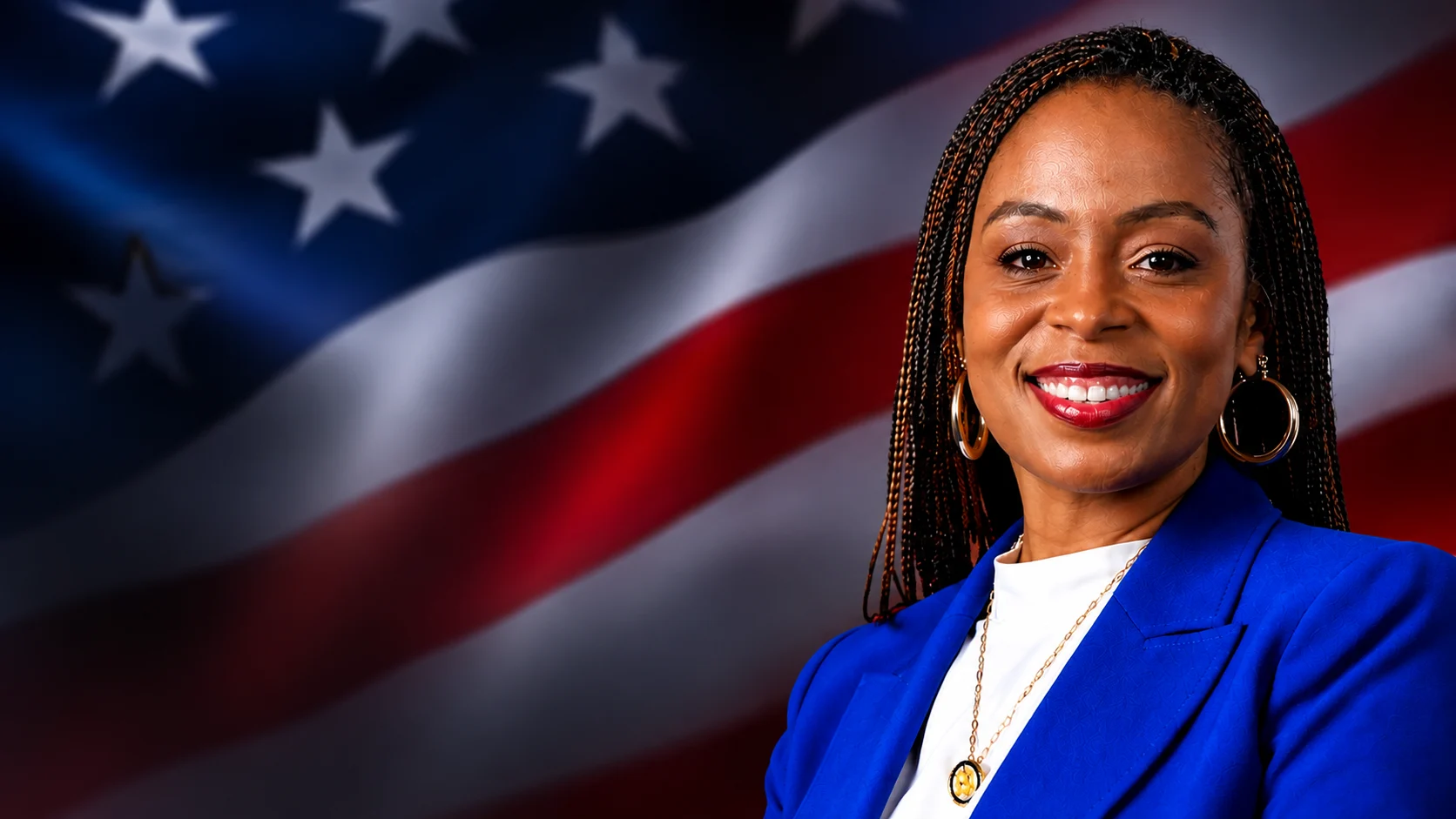
Shontel Brown appears in a royal blue blazer against a softly blurred American flag in this Cleveland Boricua editorial composite.
La Fiebre 101.7 FM
 La Fiebre 101.7 FMLa música y la voz de Cleveland.ESCUCHA EN VIVO
CLEVELAND — Cleveland’s own Shontel Brown has won another term representing Ohio’s 11th Congressional District in the U.S. House of Representatives. The Democrat defeated Republican challenger Mike Kirchner, keeping a familiar voice for Cleveland and Cuyahoga County in Washington.
Her victory came alongside three consequential Ohio results: Democrat Amy Acton defeated Republican Vivek Ramaswamy for governor; Democrat Sherrod Brown defeated Republican incumbent Jon Husted in the special U.S. Senate election; and Democrat Brian Poindexter defeated Republican incumbent Max Miller in Ohio’s 7th Congressional District. The victories emerged from Ohio’s November 3 midterm election.
Shontel Brown: continuity for Cleveland in Washington
Shontel Brown has represented the district since November 2021. Her campaign priorities include obtaining federal resources, defending constituent benefits and supporting working Ohioans. Her public service began on Warrensville Heights City Council before she served on Cuyahoga County Council.
For Cleveland residents, the significance is practical as well as political. A returning representative retains experience navigating federal agencies and the congressional funding process. The next questions are which community projects receive support, what positions she takes in budget negotiations and how her office addresses constituents’ needs. A reelection victory itself does not award a grant or change a benefit rule.
With the next Congress still organizing, readers should also distinguish Brown’s current committee assignments from the assignments she receives for the coming term. Those decisions can shape where she has the greatest influence.
Brian Poindexter defeats Max Miller in Ohio’s 7th District
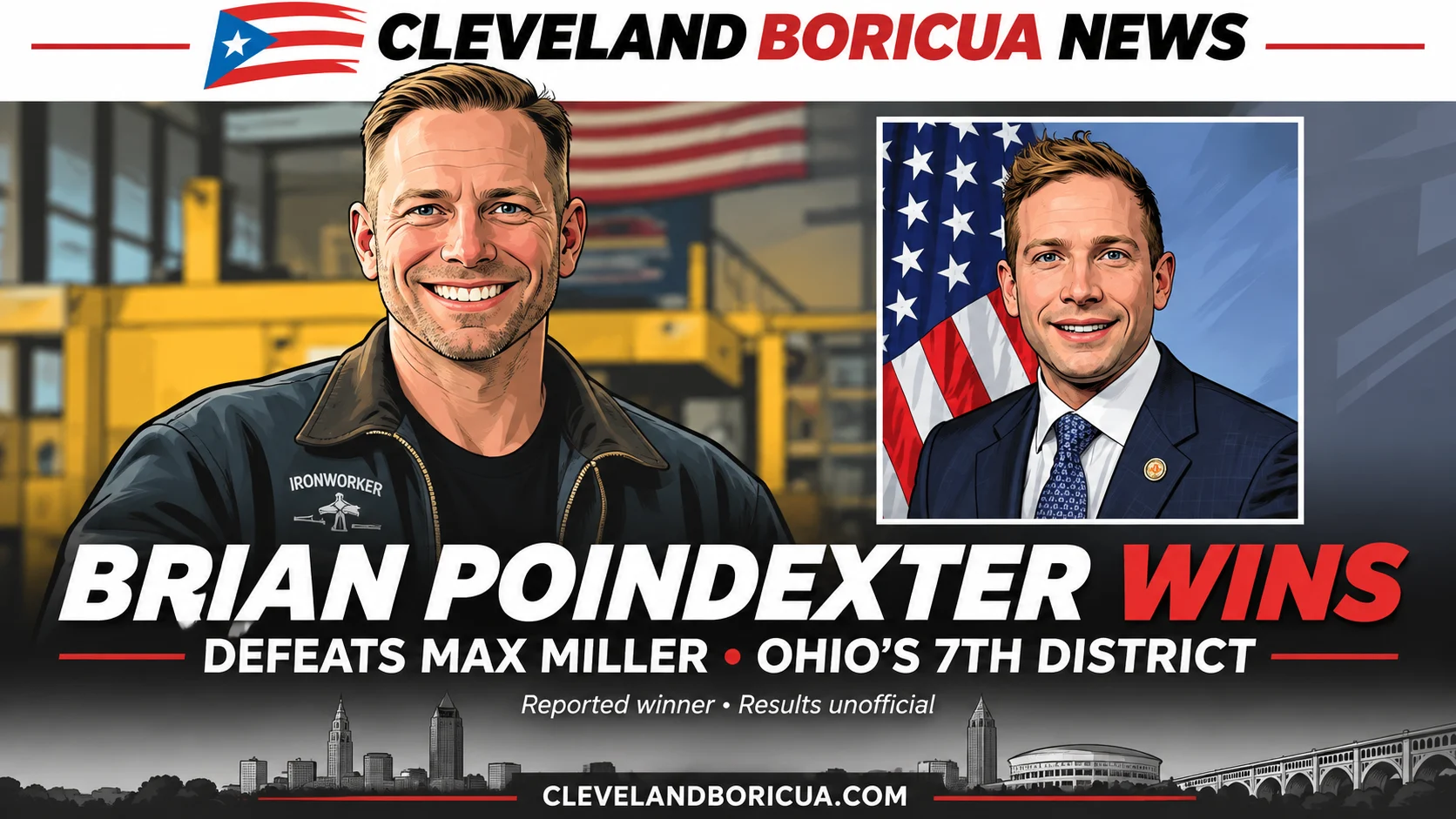
Brian Poindexter defeated Max Miller, flipping a congressional district that includes Cleveland’s western suburbs and neighboring communities.
Poindexter brings a background in the building trades and local government. He grew up in Cleveland, became a union ironworker in 2007, earned an applied industrial technology degree at Cuyahoga Community College and later worked as an apprenticeship instructor with Ironworkers Local 17. He also served on Brook Park City Council.
Miller’s campaign faced domestic abuse allegations from his former wife and pressure to leave the race. Miller denied those allegations. The election result should not be treated as a court finding about them.
Poindexter’s campaign emphasized household costs, health care and workers’ bargaining power. For the West Side, the change means a different representative and a different set of priorities in federal debates.
In his candidate questionnaire published by Ballotpedia, Poindexter said he supports the PRO Act, raising the minimum wage and reversing health care cuts. Those are stated policy goals. A House member can introduce, cosponsor and vote on legislation, but cannot enact those changes alone. His interview with Katharine Huntley provides additional background on his economic message.
Sherrod Brown returns to the Senate after defeating Jon Husted
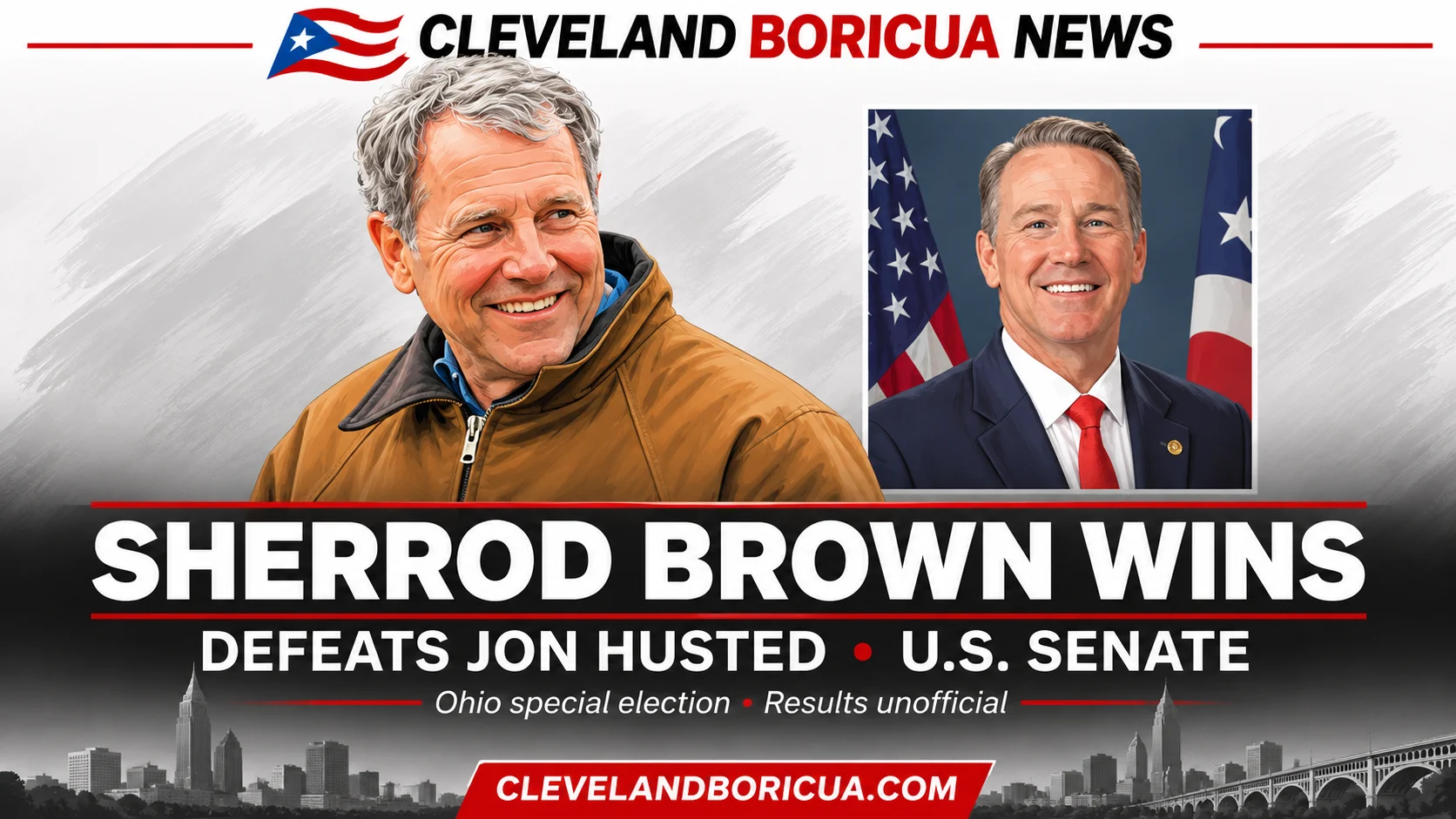
Former U.S. Sen. Sherrod Brown defeated incumbent Jon Husted, in Ohio’s special U.S. Senate election. The contest was a special election for the remainder of the term associated with the seat vacated by JD Vance. Husted had been appointed by Gov. Mike DeWine in January 2025.
The distinction matters: this election fills the remainder of that term, ending in January 2029, rather than beginning a fresh six-year term. It is also a different seat from the one Brown lost in 2024.
Brown’s campaign focused on manufacturing, labor, household costs and health care. He also raised concerns about data centers increasing electricity and infrastructure costs. His return gives those priorities another advocate in federal negotiations, but does not automatically reverse existing federal policy.
Brown’s campaign website places pensions, prescription affordability, veterans’ care and workers’ interests at the center of his public record. These campaign statements help explain his agenda; the measures he introduces and the votes he casts will show how that agenda develops after the election.
Amy Acton wins Ohio governor’s race in a historic result
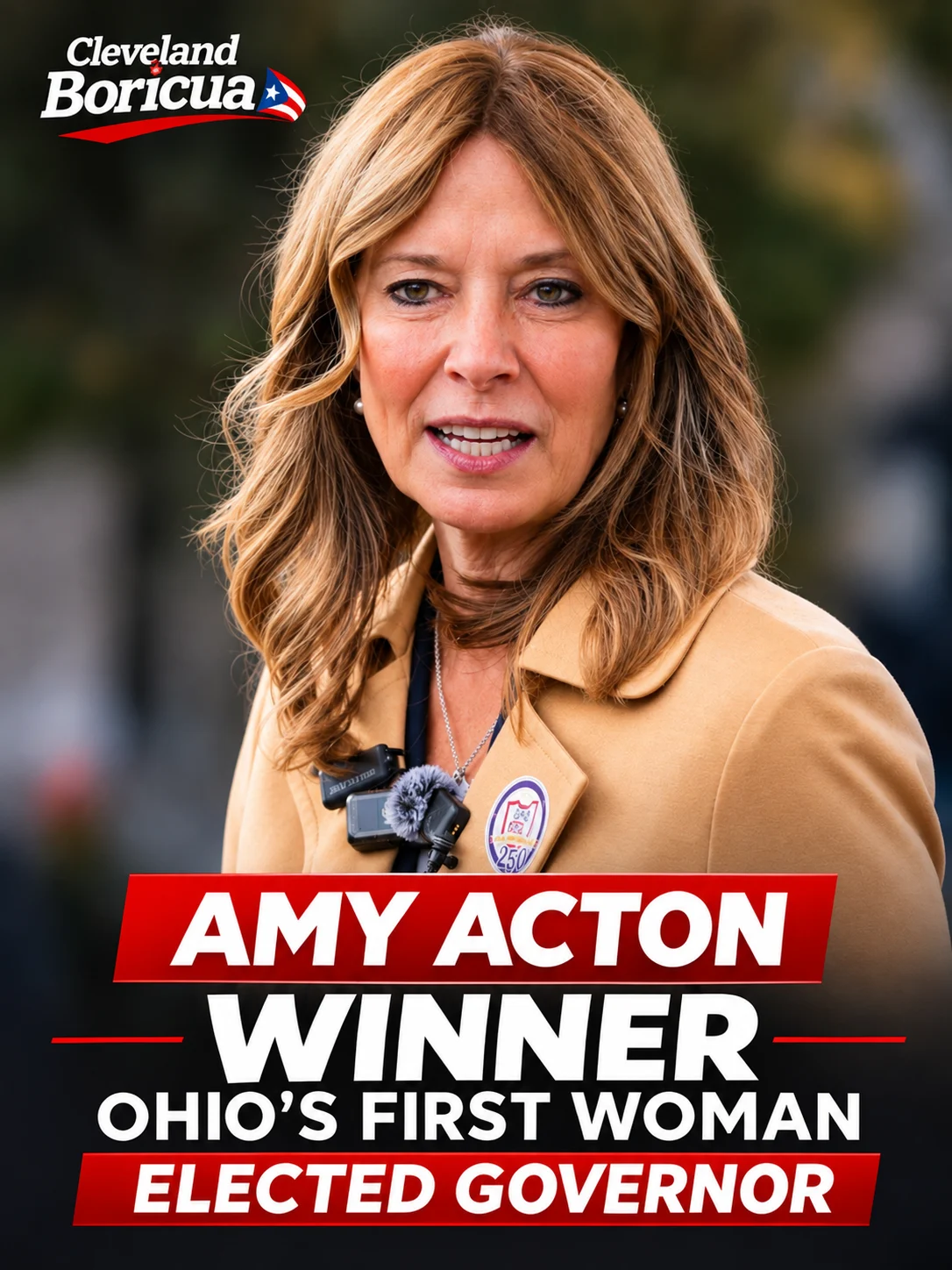
Democrat Dr. Amy Acton defeated Republican Vivek Ramaswamy, becoming the first woman elected governor of Ohio, according to The Associated Press. The former state health director will succeed outgoing Gov. Mike DeWine.
Acton campaigned on affordability, education, health coverage and energy costs. Her proposals include expanding help for seniors facing property taxes and requiring data center developers to shoulder their own infrastructure and energy costs.
For Cleveland, the policy stakes run through the state budget: public schools, health care, local government support and economic development. The governor also influences agency leadership and administration. The question is how Acton’s priorities translate into the first budget she negotiates with the General Assembly.
Her published affordability agenda proposes a child tax credit of $1,000 annually for children ages 0 through 6 and $500 for children ages 7 through 18 for qualifying families earning up to $85,000. It also proposes changes to the earned income credit, wage theft enforcement and consumer protections. These are campaign proposals, not newly available benefits. Eligibility and payment details could change during legislation.
In her November 3 victory statement, Acton pledged to serve Ohioans across political lines. The statement is a campaign source, distinct from the independent reporting of the result.
Issue 3 passes: what changes about voting?
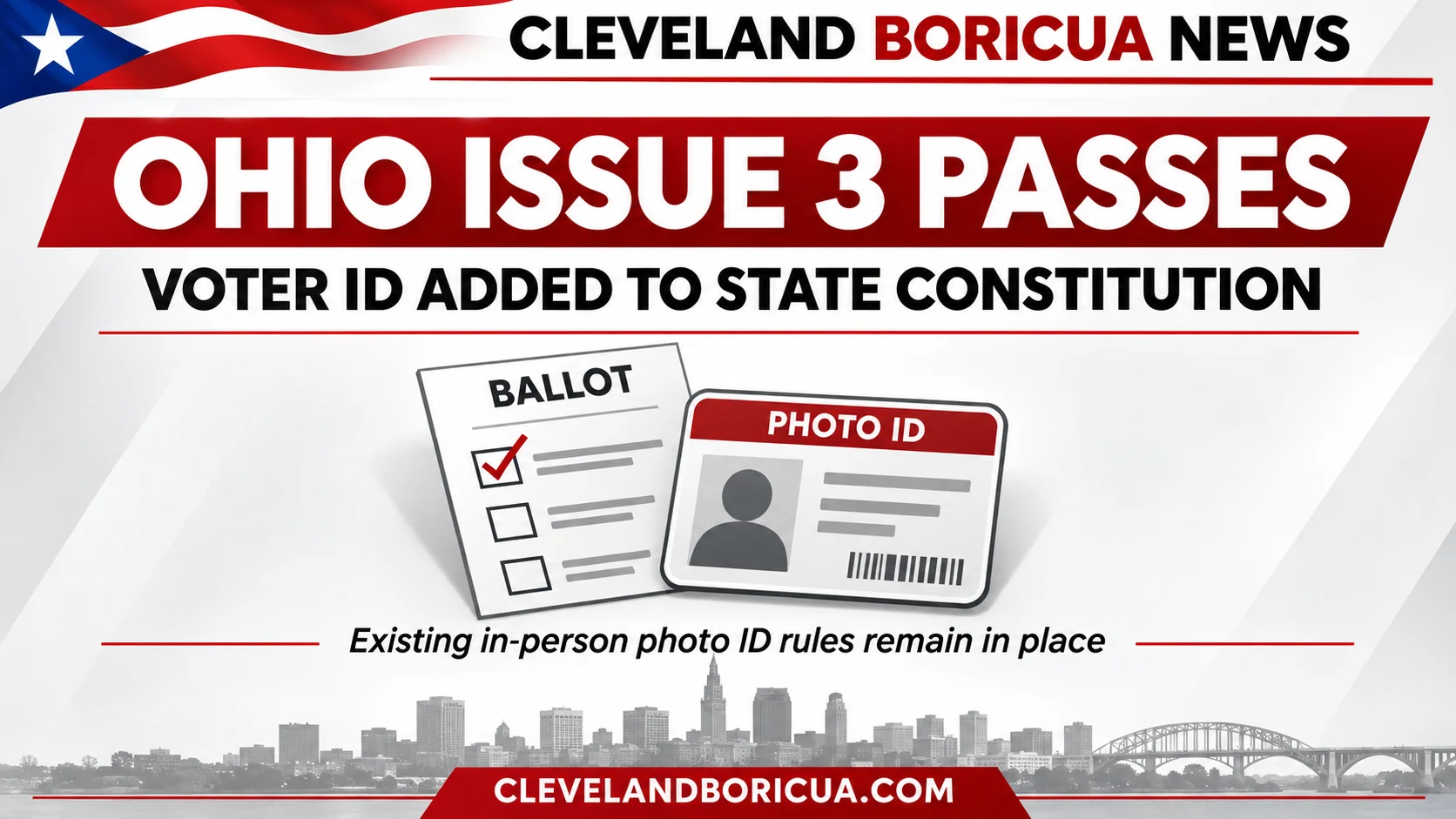
Ohio voters approved Issue 3, adding voter identification requirements to Ohio’s Constitution. Ohio already required photo identification for in-person voting under state law. The central change is giving the requirement constitutional status.
The official ballot language lists an unexpired Ohio driver’s license or state ID; a U.S. passport or passport card; and specified U.S. military, Ohio National Guard and Veterans Affairs identification. It allows state law to provide an alternative identity-verification method for people with sincere religious objections to being photographed. The ballot language says the amendment takes effect immediately if approved.
The state’s certified explanation makes a separate point about absentee voting: people voting through another authorized method can provide the specified photo identification or, when Ohio law permits, a signature and at least one other approved unique identifier. Passage therefore does not itself mean every mail voter must enclose a photocopy of an ID.
Why supporters wanted it: The published argument for Issue 3, prepared by Reps. Adam Bird and Heidi Workman and Sens. Theresa Gavarone and Jane Timken, argues that constitutional protection strengthens identity checks, confidence and stability. Those are the proponents’ arguments, not evidence that widespread impersonation occurred.
Why opponents objected: The published argument against Issue 3, prepared by Sen. Bill DeMora and Reps. Desiree Tims and Terrence Upchurch, says the amendment duplicates existing requirements, limits flexibility for newer identification technology and does not guarantee protections for other voting methods.
For Cleveland voters, the practical step is to check the accepted documents before the next election and use current guidance from the Cuyahoga County Board of Elections. A constitutional requirement cannot simply be removed through an ordinary bill signed by the governor.
The national picture: Democrats win control of Congress
Democrats won both the U.S. House and Senate. This was a midterm election; it did not elect a new president. Donald Trump remains president, while congressional control changes for the next Congress.
| Election results snapshot | Democratic side | Republican side | Important context |
|---|---|---|---|
| U.S. Senate, 6:26 a.m. EST | 54 | 44 | Democratic figure includes two allied independents; two seats are not allocated in this snapshot. |
| U.S. House, 6:28 a.m. EST | 228 | 139 | 68 of 435 seats are not allocated in this snapshot. |
| Governorships, 6:28 a.m. EST | 28 | 20 | Two of 50 governorships are not allocated in this snapshot; not all states held elections. |
These figures show the balance of power at 6:26–6:28 a.m. EST on November 4. They are historical snapshots, not final totals. Check Cleveland 19’s national results for updates.
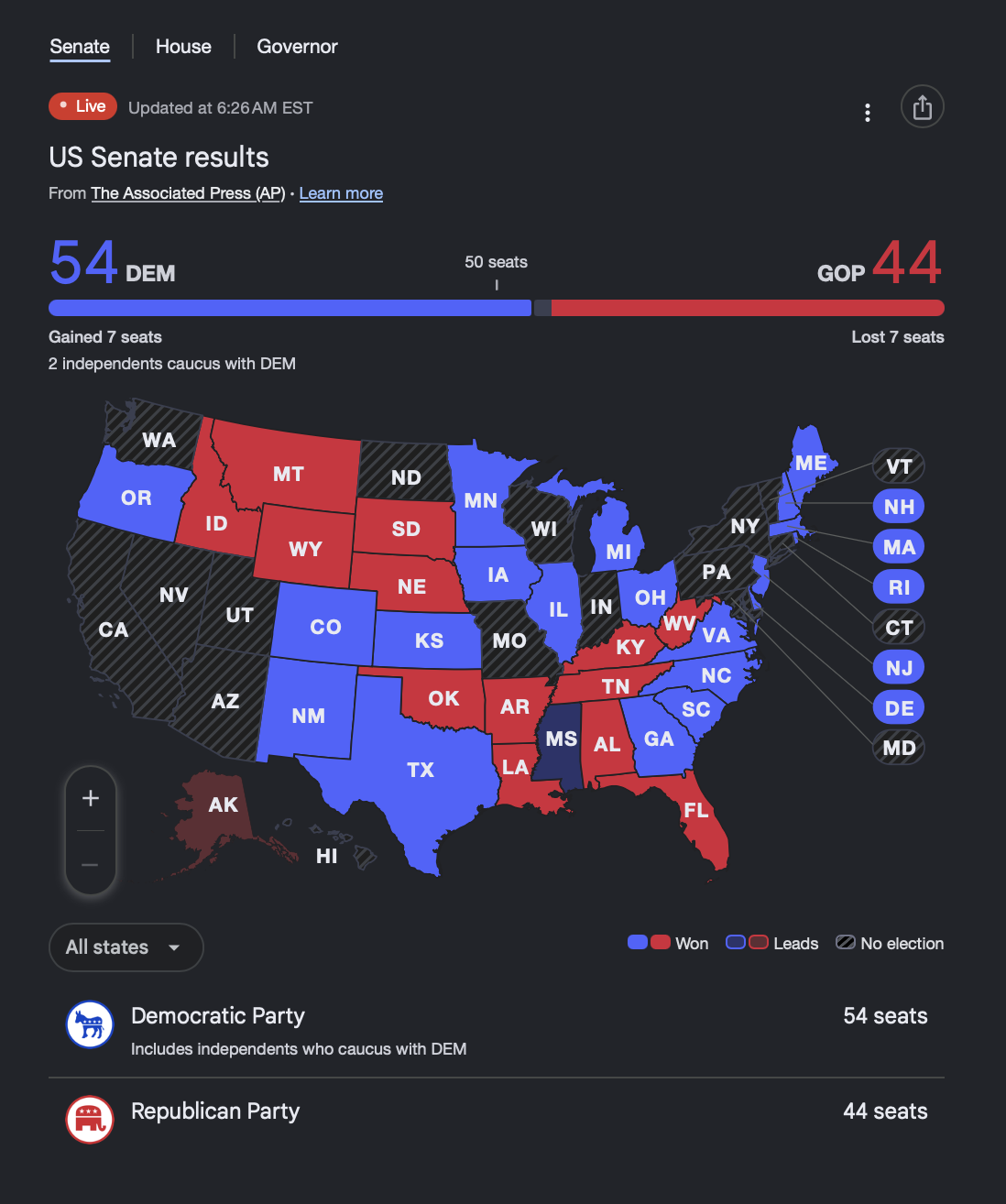
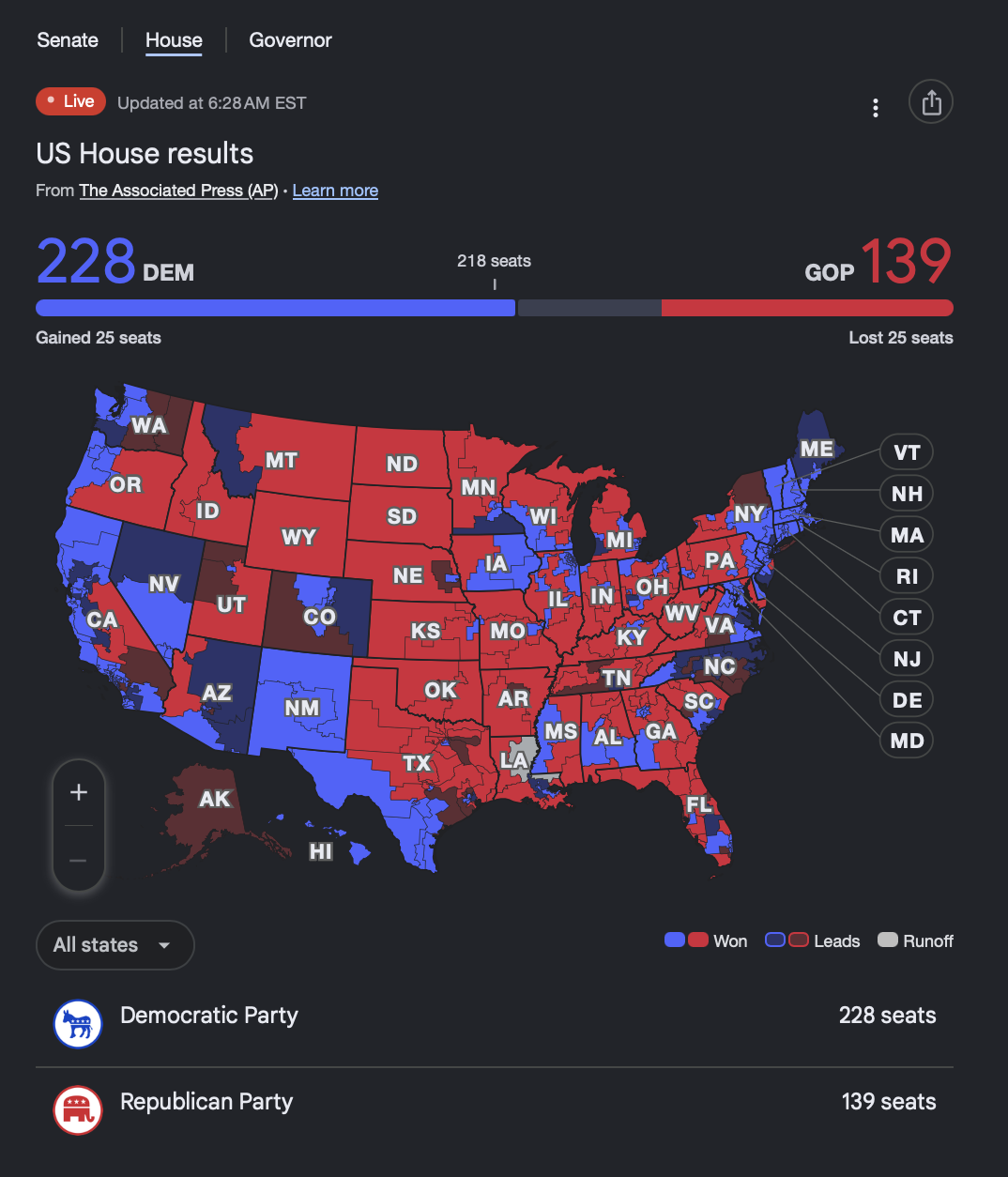
Among the national Senate results reported by AP through 13abc: James Talarico defeated Ken Paxton in Texas; Annie Andrews defeated Darline Graham in South Carolina; Jon Ossoff won reelection in Georgia; and Chris Pappas won New Hampshire’s open seat. Republican Ashley Moody won Florida’s special election and Harriet Hageman won Wyoming’s Senate race. This is a selection of consequential races, not an exhaustive list of every congressional winner.
Governor results: an early-morning snapshot
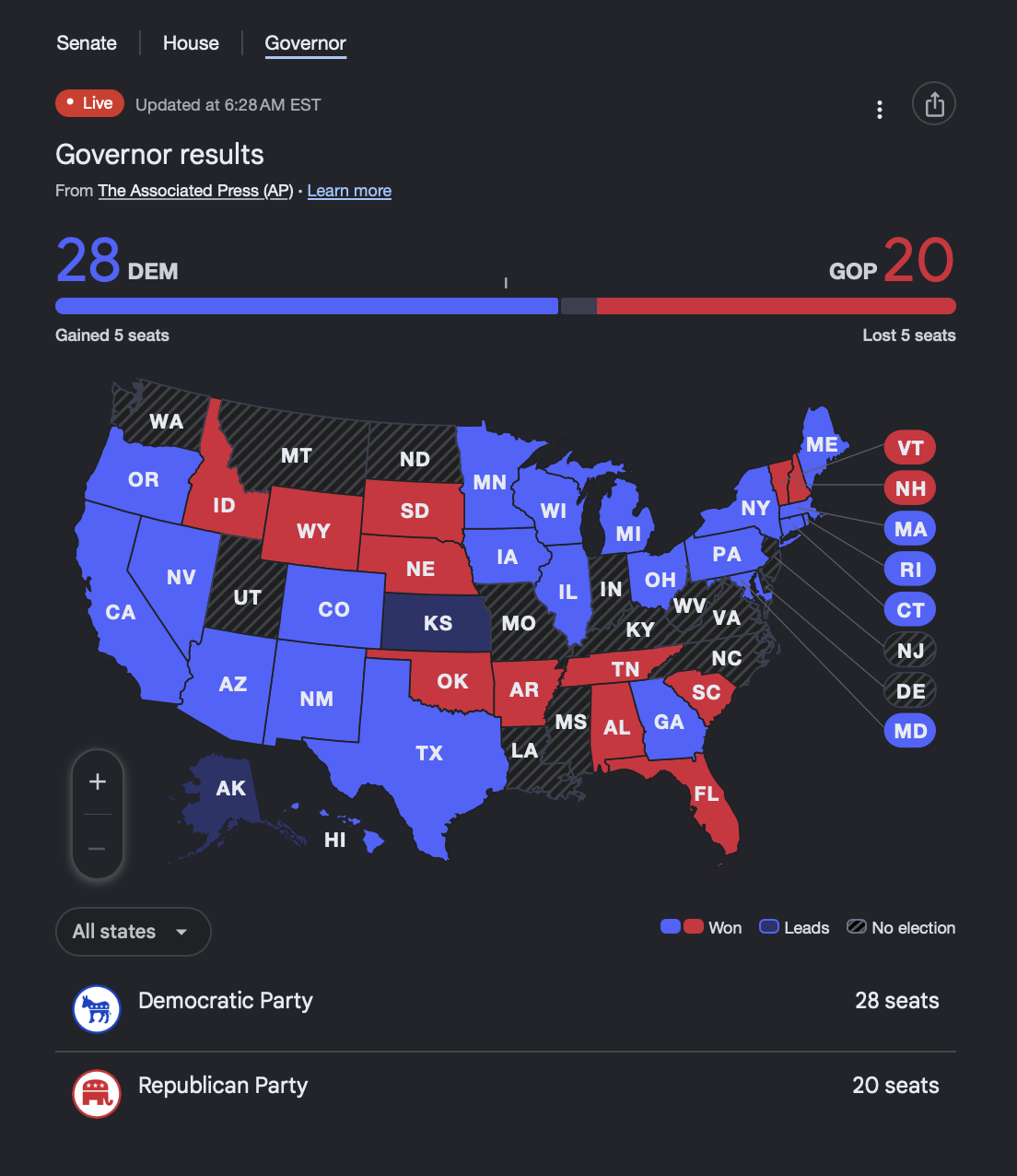
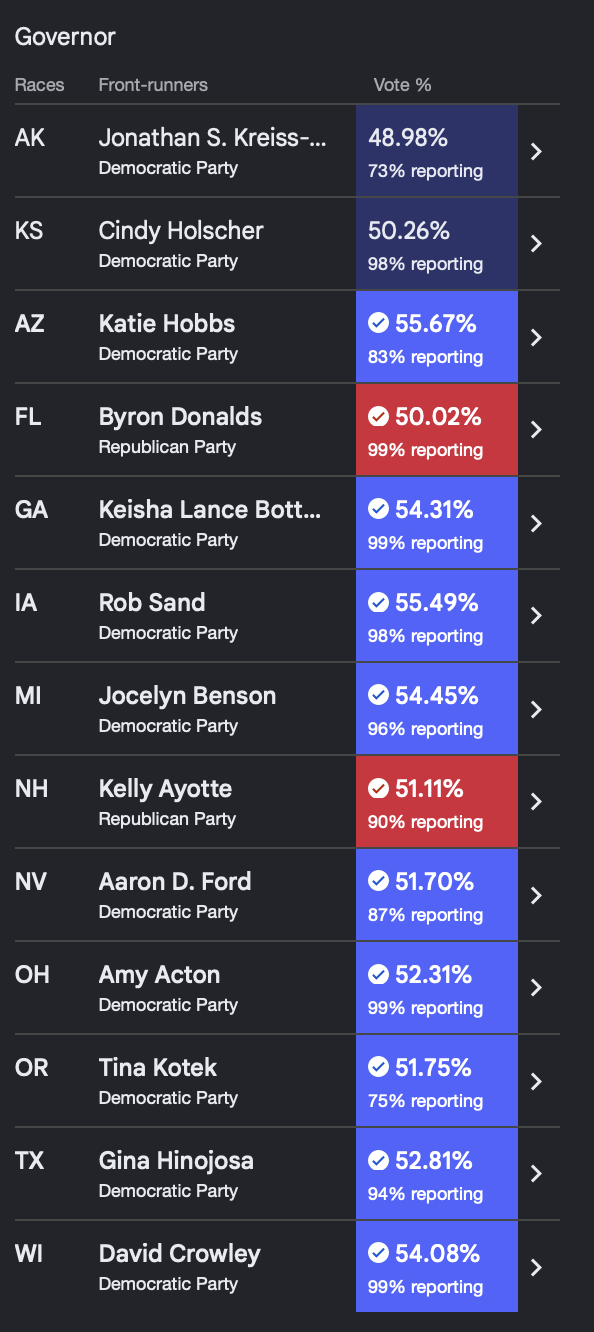
The governor results below distinguish reported winners from candidates who were still leading uncalled races. Percentages reflect the early-morning snapshot and remain unofficial.
| State | Candidate shown | Vote share | Reporting | Status in screenshot |
|---|---|---|---|---|
| Alaska | Jonathan Kreiss-Tomkins (D) | 48.98% | 73% | Leading; race not called in snapshot |
| Kansas | Cindy Holscher (D) | 50.26% | 98% | Leading; race not called in snapshot |
| Arizona | Katie Hobbs (D) | 55.67% | 83% | Reported winner |
| Florida | Byron Donalds (R) | 50.02% | 99% | Reported winner |
| Georgia | Keisha Lance Bottoms (D) | 55.31% | 99% | Reported winner |
| Iowa | Rob Sand (D) | 55.49% | 98% | Reported winner |
| Michigan | Jocelyn Benson (D) | 54.45% | 96% | Reported winner |
| New Hampshire | Kelly Ayotte (R) | 51.11% | 90% | Reported winner |
| Nevada | Aaron D. Ford (D) | 51.70% | 87% | Reported winner |
| Ohio | Amy Acton (D) | 52.31% | 99% | Reported winner |
| Oregon | Tina Kotek (D) | 51.75% | 75% | Reported winner |
| Texas | Gina Hinojosa (D) | 52.81% | 94% | Reported winner |
| Wisconsin | David Crowley (D) | 54.08% | 99% | Reported winner |
Other Ohio races: reported winners and contests still open
Other Ohio congressional winners include Republican Jim Jordan in District 4, Republican Bob Latta in District 5, Republican Michael Rulli in District 6, Republican Troy Balderson in District 12, Democrat Emilia Sykes in District 13 and Republican Dave Joyce in District 14. These results show that the statewide Democratic breakthroughs did not erase Republican representation in Ohio’s congressional delegation.
At the time reviewed, statewide election returns identified Allison Russo as the winner for secretary of state and Jennifer Brunner as the winner in her Supreme Court contest. It showed John Kulewicz leading Keith Faber for attorney general, Frank LaRose leading Annette Blackwell for auditor, Seth Walsh leading Jay Edwards for treasurer and Marilyn Zayas leading Daniel Hawkins in the other Supreme Court race. Those four contests were not marked as called on that page and are not declared won here.
For a full ballot rather than a selected roundup, consult Ohio’s statewide results and the county election board. Legislative races, judicial contests and local issues require their own race-level verification.
Cuyahoga County’s social service levies also matter
Statewide winners are only part of the local story. Early Wednesday’s unofficial returns showed that Issues 10 and 11 were projected to pass, with each receiving more than 60% support in unofficial results.
Issue 10 supports the county Board of Developmental Disabilities; Issue 11 supports health and human services. The measures would provide roughly $100 million in new revenue for developmental disability services and an additional $111 million for health and human services.
These decisions can affect assistance for people with disabilities, seniors, children and families, while also affecting property taxes. They are separate from statewide Issue 3. Issue numbers can repeat across jurisdictions, so readers should match each measure to the correct county, municipality or school district.
What Cleveland should watch next
The following is analysis of the reported results and stated proposals, not a prediction that particular laws will pass.
1. Household costs and the first state budget
Watch for the actual tax-credit language Acton proposes, the income limits lawmakers accept and the revenue needed to pay for it. A campaign example is not a tax filing instruction. The same scrutiny applies to property-tax relief: who qualifies, who pays and how schools and local services are funded afterward?
2. Health coverage and access to care
Acton, Sherrod Brown and Poindexter all campaigned on health care. Their offices operate at different levels of government. The useful measures will be enrollment rules, budget appropriations, prescription policy and access to providers. An election win does not restore coverage or cancel medical debt on its own.
3. Electricity bills and data center development
The next test is whether Ohio adopts enforceable rules assigning construction, power and water costs to developers. Cleveland households and businesses should watch utility proceedings and local development agreements as closely as speeches. Any claim of guaranteed bill reductions needs a specific mechanism and implementation date.
4. Workers, small businesses and community investment
Poindexter’s labor platform and Sherrod Brown’s manufacturing agenda could influence federal priorities. For Cleveland Boricua readers, the practical questions include access to training, fair pay, stable benefit programs and opportunities for neighborhood businesses. Those interests are shared by residents across ethnicity and party; election results alone do not establish how any particular community voted.
5. What a governor and congressional majority can actually do
Ohio’s Constitution gives the governor veto authority, including authority over individual appropriation items. Lawmakers can override a veto with three-fifths of the elected membership in each chamber. The composition of the state legislature therefore remains central to Acton’s ability to implement her agenda.
In Washington, congressional majorities can set committee agendas and conduct oversight, but ordinary legislation still faces procedural and constitutional limits. The Senate’s explanation of cloture describes the usual 60-vote requirement to end debate on legislation. A simple majority is not a guarantee that every bill reaches a final vote.
What happens before these results become official?
The Ohio secretary of state’s post-election explanation says election officials review provisional ballots and other eligible outstanding ballots before completing the official canvass. County certification is due no later than 21 days after Election Day, followed by state review. Close statewide contests may trigger an automatic recount under the applicable threshold.
The Cuyahoga County Board of Elections lists a November 24 meeting for certification. Until that process is complete, the responsible way to describe the results is to identify the reporting source, preserve the difference between a lead and a race call and label vote totals unofficial.