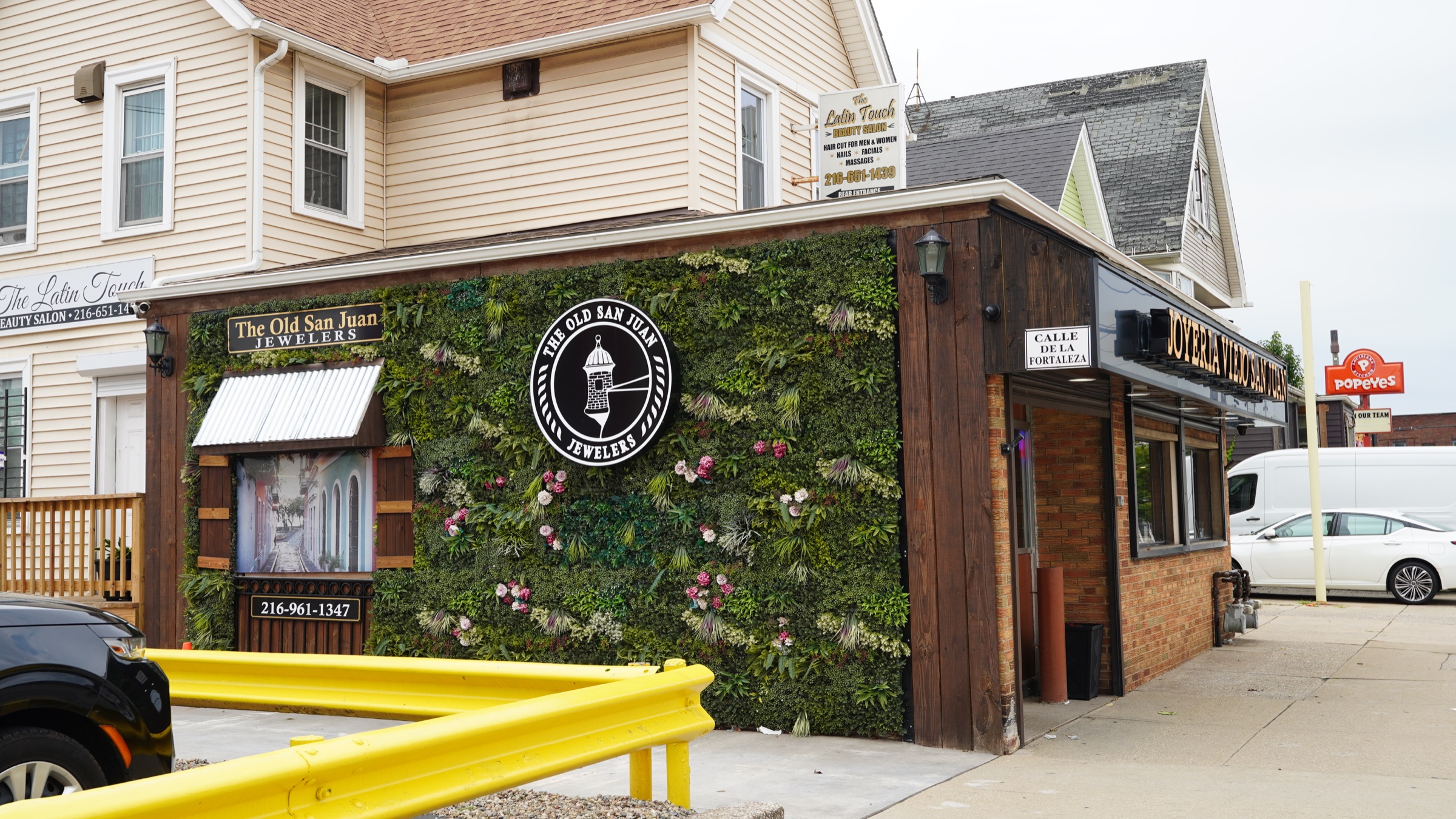
What began with two display cases in a neighborhood barbershop became a family business where jewelry marks births, quinceañeras, weddings—and a Puerto Rican community’s enduring place in Cleveland.
From two display cases to Clark Avenue
Before there was a storefront wrapped in greenery on Clark Avenue, before the round tower logo and the sign evoking the cobblestone streets of Puerto Rico, there were two jewelry cases and a small repair room inside a Cleveland barbershop.
That was 1992. Ramón Pagán, raised in Puerto Rico and descended from a family of jewelers, was working in a factory while building a second life at the jeweler’s bench. His first operation was called S&R Fashion Jewelers. The scale was modest, but the idea was not: create a place where craftsmanship, trust and Latino tradition could meet.
La Fiebre 101.7 FM
 La Fiebre 101.7 FMLa música y la voz de Cleveland.ESCUCHA EN VIVO
Seven years of repairs and customer relationships carried the business toward expansion. In December 2000, Pagán opened Old San Juan Jewelers at 2705 Clark Ave., in the commercial heart of Cleveland’s Clark–Fulton neighborhood. Public records list the business as beginning Dec. 1, 2000; its own history describes that month as the moment the Old San Juan name and new storefront opened their doors.
Why this shop belonged on Clark Avenue
The address matters. Puerto Rican Clevelanders began concentrating in Clark–Fulton in the 1960s, moving both from the island and from earlier East Side and near-West Side enclaves. Case Western Reserve University’s Encyclopedia of Cleveland History describes Clark–Fulton as the Cleveland neighborhood with the city’s highest concentration of Hispanic residents, a majority of them of Puerto Rican descent.
By the time Old San Juan opened its Clark Avenue location, the corridor already held generations of migration stories: Spanish-language church services, hometown social clubs, barbershops, groceries and other small businesses that helped newcomers find work, housing, familiar food and one another. The jewelry store entered that ecosystem not simply as a retailer, but as a keeper of the objects families use to remember.
Gold and silver become more than adornment when they carry a child’s protection, a family name or the promise of a marriage.
The Western Reserve Historical Society’s Clark–Fulton tour notes that Old San Juan became known for cultural pieces difficult to find elsewhere locally: azabache bracelets traditionally given to babies, Mexican arras matrimoniales used in wedding ceremonies, and symbols crossing other traditions, including the Italian horn and the evil eye. The shop also serves the milestones around those objects—baptisms and communions, quinceañeras, weddings, anniversaries and memorial gifts.
A family business built around repair
Old San Juan’s growth did not erase its original workbench identity. The shop says it handles gold and silver repairs in-house, with some jobs completed on the spot. It also provides engraving, watch-battery changes and link removal, alongside 10- and 14-karat gold, silver, stainless steel, gold-plated collections and customized name pieces.
That mix explains how the business has lasted. New jewelry may bring someone through the door, but repairs create return visits: a snapped chain, a ring that no longer fits, a watch handed down through a family. In a trade built on precious materials, the more precious commodity is confidence in the person doing the work.
The next generation is part of that continuity. In a 2025 Cleveland Magazine feature, Alexandra Pagán was identified as co-owner with her father. “We take pride in our business and it being family based and prioritizing our people,” she told the magazine. The Better Business Bureau’s profile also names Ramón Pagán in management and Alexandra Pagán as a customer contact.
From neighborhood counter to regional reach
The first customers were primarily Puerto Ricans living nearby, according to the Western Reserve Historical Society. Over time, the clientele expanded across Northeast Ohio and beyond the state, helped by mail-in orders and shipping. The family opened a second location in Painesville in May 2018, extending the Old San Juan name into Lake County.
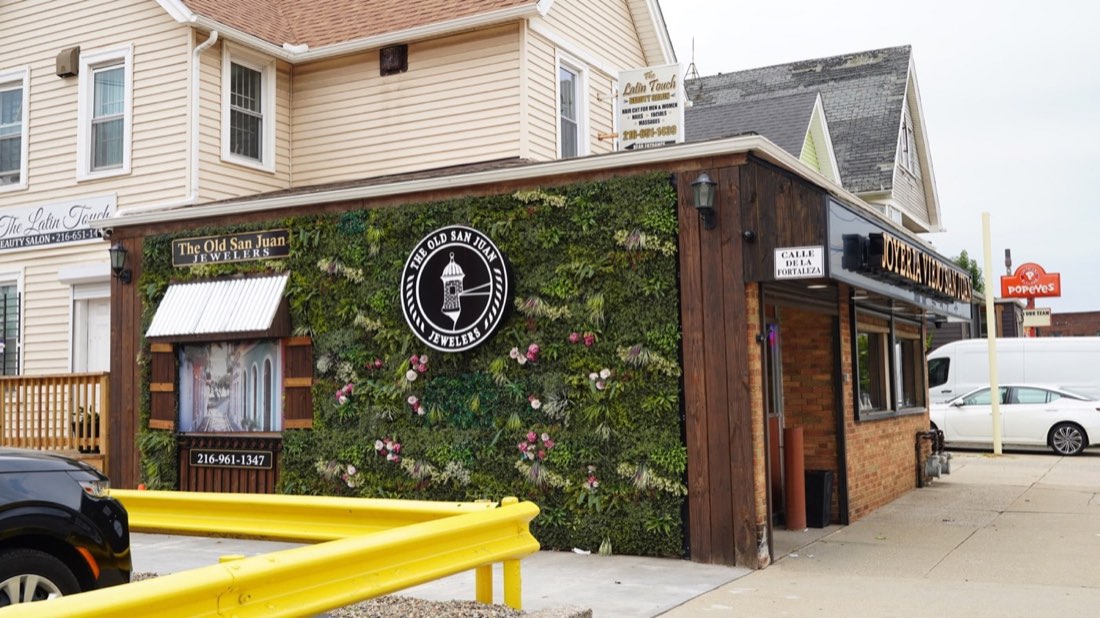
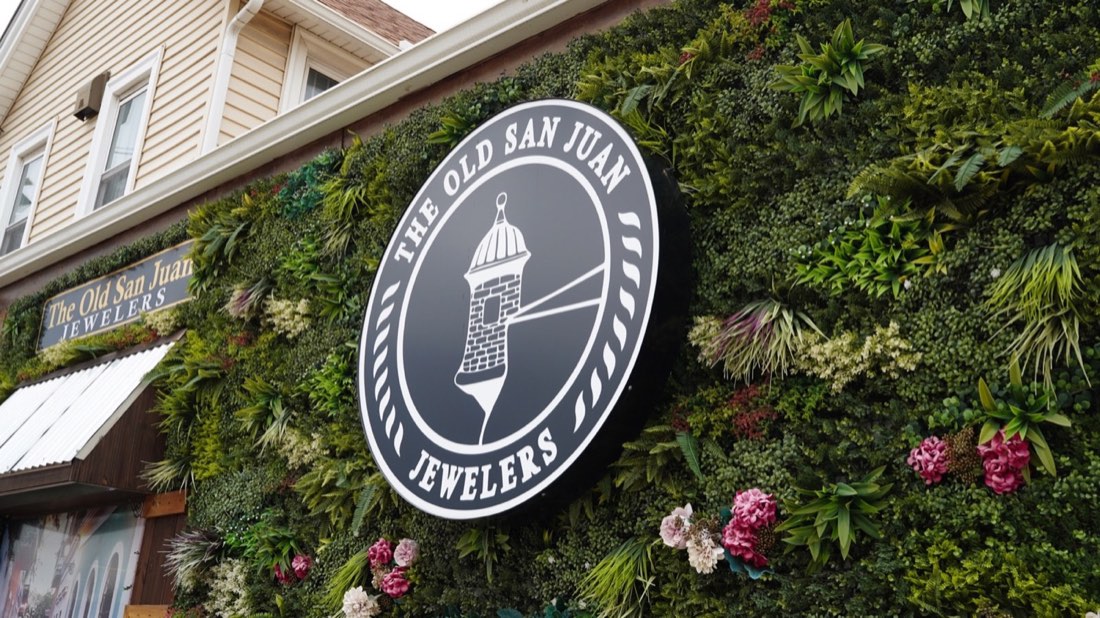
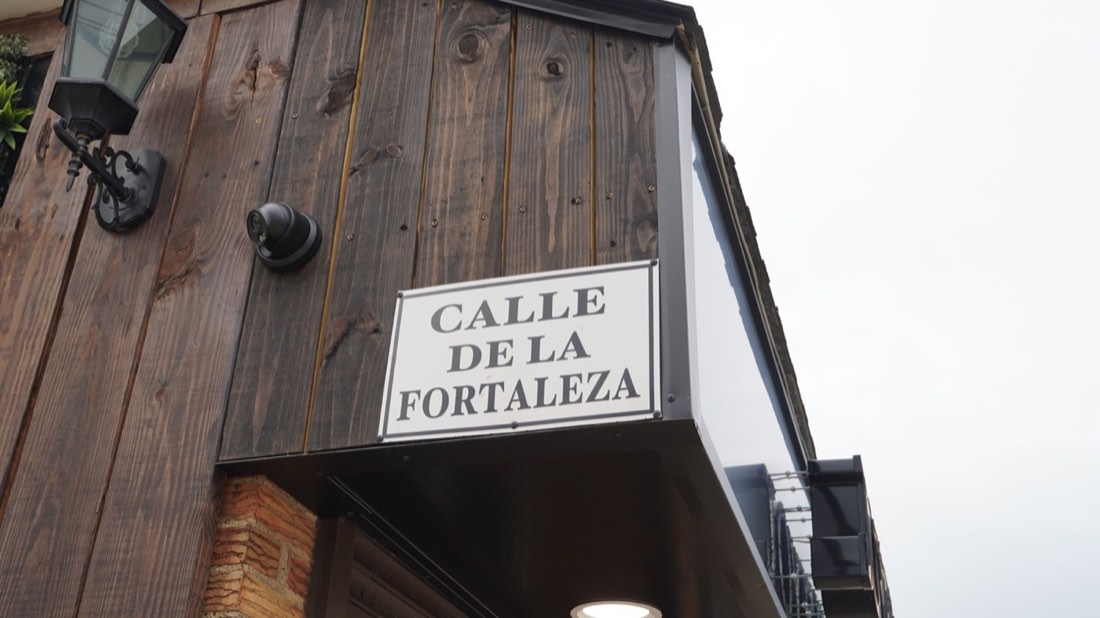
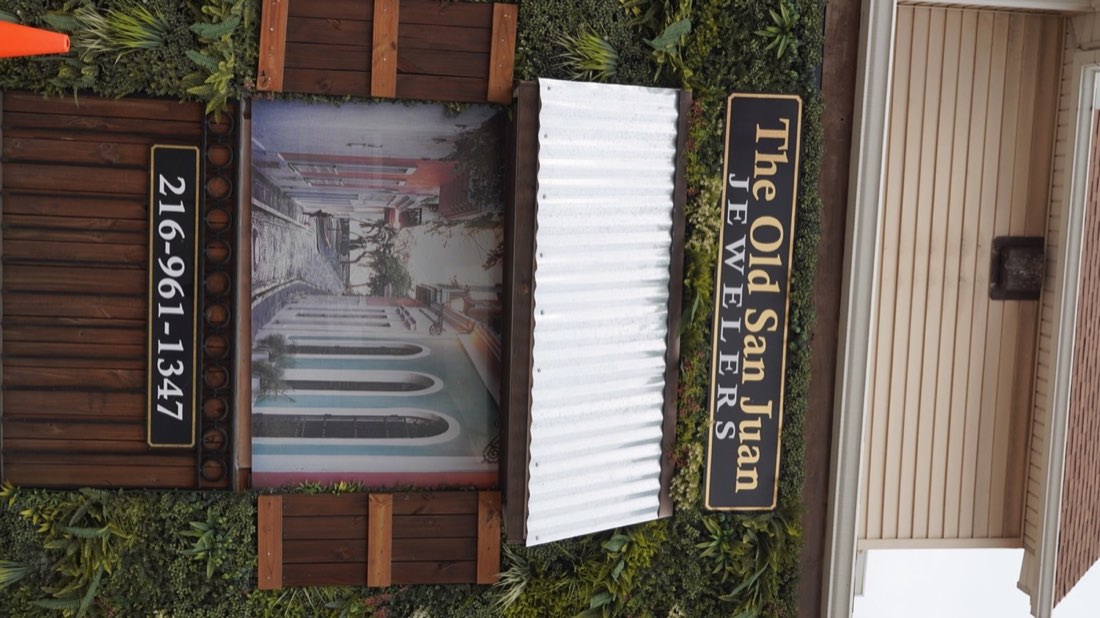
Yet the Cleveland storefront remains the clearest expression of the business’s roots. Its façade does not blend quietly into the block. Wood, flowers, greenery, a colonial streetscape and the black-and-white garita emblem turn the building into a small visual passage between Ohio and Puerto Rico.
A landmark measured in relationships
Clark–Fulton continues to change. The neighborhood’s La Villa Hispana initiative has formalized what residents and merchants built over decades: a cultural and economic center for Latino Cleveland. New investment now shares the corridor with long-established businesses whose survival made that future imaginable.
Old San Juan Jewelers belongs to that longer story. Its history answers the familiar questions—who started it, where, when and how—but the “why” lives in the families who return. They come because a cultural symbol is available here, because a repair can be trusted here, or because the person behind the counter may remember the last milestone they celebrated.
In a neighborhood shaped by movement, the shop gives memory a physical form: a name on a chain, a bracelet on a newborn’s wrist, wedding coins passed from one generation to another. Old San Juan is a jewelry store. After more than three decades, it is also one of the places where Cleveland’s Puerto Rican story shines in plain sight.
ORIGINAL PHOTO GALLERY
A piece of Old San Juan on Clark Avenue
Four original Cleveland Boricua photographs from April 18, 2022, document the landmark storefront. Select any photograph to open the full-screen gallery.
YOU SHAPE THE NEWSROOM
What should Cleveland Boricua cover next?
YOUR CLEVELAND MEMORY
Were you there? Add your voice.
Share a memory, a correction, a family photo, or a lead for the next chapter. Every submission goes to the Cleveland Boricua moderation inbox first.
THE COMMUNITY QUESTION