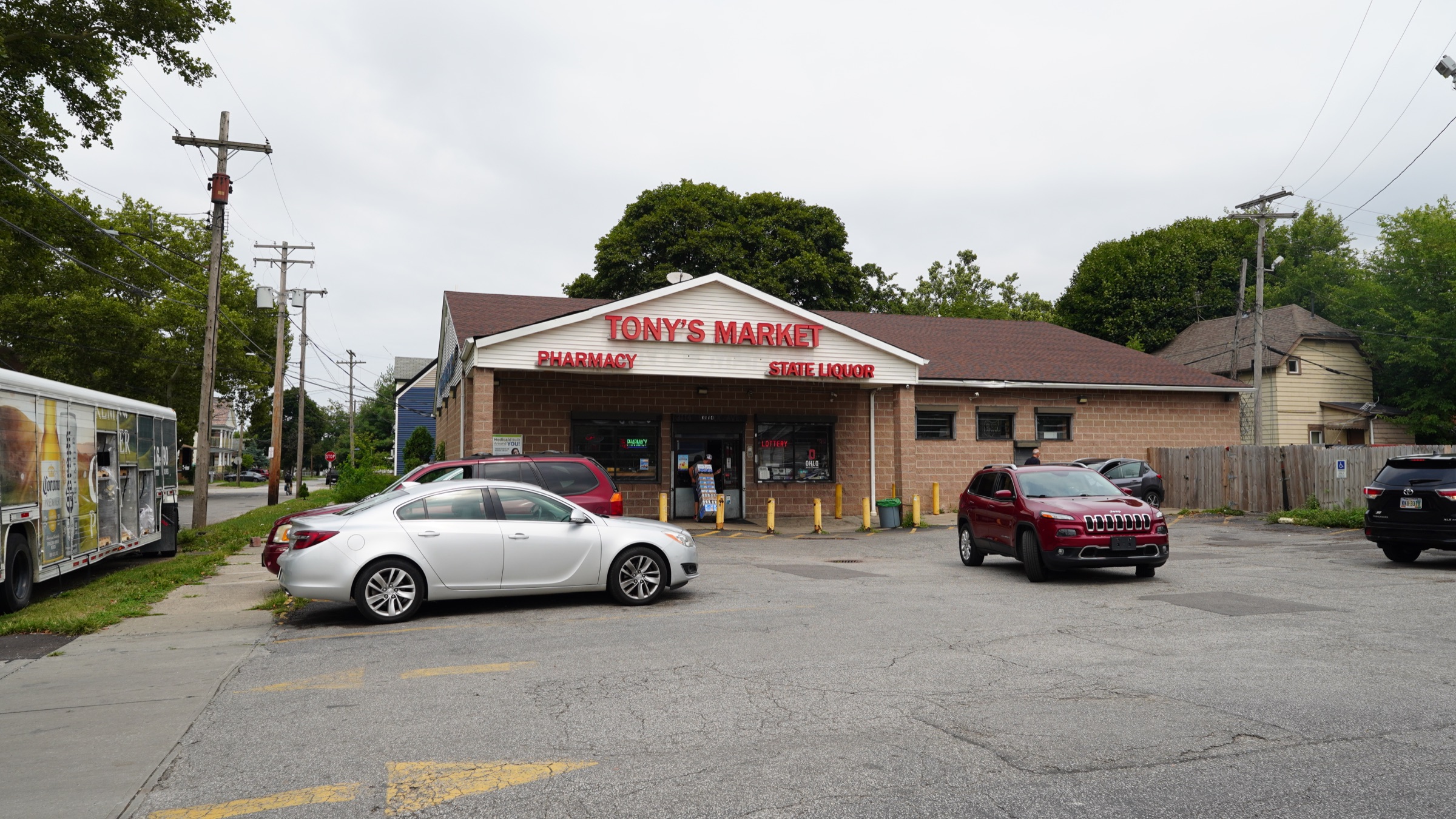
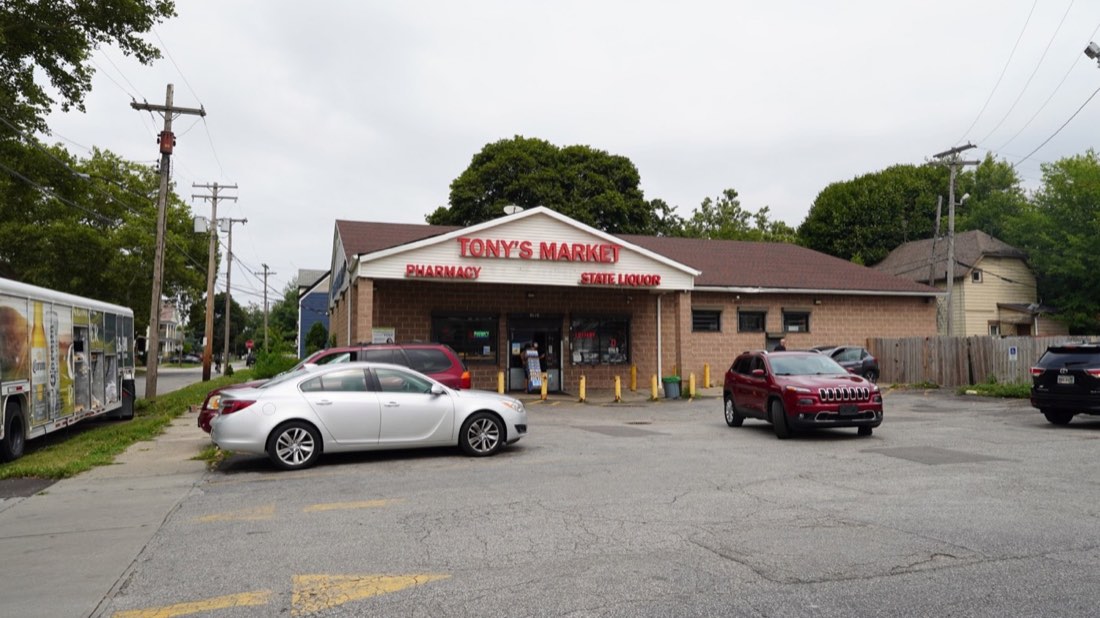
When we travel Clark Avenue, the errands of daily life converge beneath three red signs: Tony’s Market. Pharmacy. State Liquor.
A neighborhood store built around everyday life
The building at 3114 Clark Ave., near West 32nd Street, is not a polished specialty shop or a national chain. It is something more characteristic of a working neighborhood: a market that has adapted its shelves and services to what people nearby need. Public listings describe groceries and fresh food, Latin American products, beer and wine, an Ohio liquor agency, lottery sales, money transfers, check cashing, bill payment and other practical services. A pharmacy now operates from the same address.
A customer can pick up Goya products, produce or meat, handle a payment, buy an RTA pass, fill a prescription and make another household purchase without traveling to several distant businesses. In a neighborhood where time, transportation and access matter, convenience is not a slogan. It is infrastructure.
La Fiebre 101.7 FM
 La Fiebre 101.7 FMLa música y la voz de Cleveland.ESCUCHA EN VIVO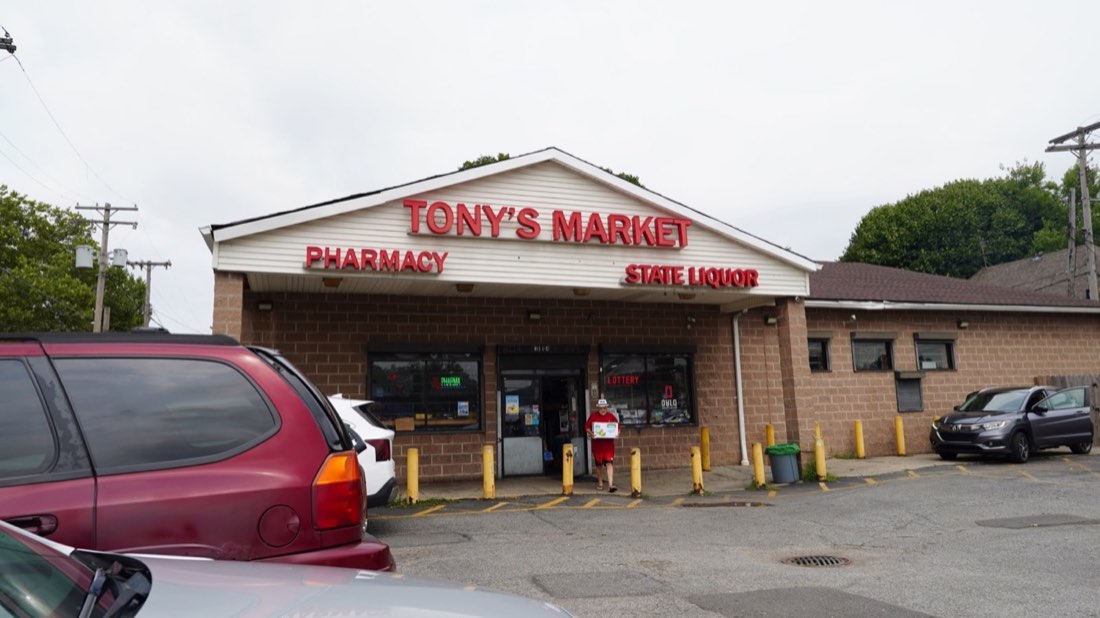
A name on Clark Avenue for generations
The oldest public clue Cleveland Boricua located appears in the Nov. 19, 1954, edition of The Lincoln Log, Lincoln High School’s student newspaper preserved by Cleveland Public Library. An advertisement promoted Tony’s Market at 3129 Clark Ave.—across the street from today’s address—selling Italian homemade sausage, groceries and vegetables from 8 a.m. to 10 p.m.
The shared name and proximity are striking. But the surviving advertisement alone does not prove uninterrupted ownership or a direct legal connection between that 1954 shop and the business now at 3114 Clark. No reliable public source reviewed for this article identifies the original Tony or establishes a complete chain of owners. The archival discovery therefore belongs in the story as evidence that the name has deep roots on this block—and as an invitation for former owners, workers and customers to help complete the record.
A modern business directory lists the present operation’s opening date as 1989. Because that date is supplied by a commercial directory rather than a primary incorporation or property record, it should be treated as an approximate marker. Tony’s Market was operating at 3114 Clark by at least 2015, when the Ohio Department of Health listed it among authorized WIC retailers.
From food market to multipurpose neighborhood stop
Public descriptions of Tony’s show a store built around range. A claimed business profile lists fresh produce and meat, Hispanic groceries, dairy, party supplies and coffee, alongside check cashing, payroll checks, money orders, money transfers, bill payment, copies, faxing and transit passes. Ohio’s official liquor-control site identifies Tony’s as Agency 40922 and calls it one of the oldest stores on Cleveland’s West Side.
In Ohio, high-proof liquor is sold through contract agencies operating on behalf of the state. Tony’s role is therefore different from that of a conventional independent liquor store: the agency provides regulated access while the wider market supplies groceries and other goods.
Current pharmacy listings place Tony’s Market Pharmacy at the same address and phone number. A 2018 customer review said the pharmacy had been added within roughly the previous year. That review is not an official opening record, but it suggests the pharmacy arrived around 2017. Cleveland Boricua did not find a reliable public record naming the present individual owners of the entire market.
A market shaped by the neighborhood around it
Tony’s sits in Clark–Fulton, a compact West Side neighborhood shaped by successive waves of immigration and migration. Puerto Rican residents began concentrating here in the 1960s, after earlier settlement on Cleveland’s East Side and in Ohio City. Today, the neighborhood remains one of Cleveland’s strongest centers of Latino life.
The market’s history reflects that change. The 1954 advertisement emphasized Italian sausage, groceries and vegetables at a time when Clark–Fulton included large European immigrant communities. Modern descriptions emphasize Latin American and Hispanic groceries. The inventory changed with the people living around it—a basic survival skill for any neighborhood market and a small record of Cleveland’s demographic history.
Tony’s belongs in the story of La Villa Hispana. Cultural districts are not made only by festivals, murals and destination businesses. They also depend on ordinary places where residents repeatedly encounter one another: the pharmacy window, the grocery aisle, the lottery counter and the parking lot.
A history still waiting to be completed
Deep research sometimes uncovers a clean founding story: a named owner, an opening day and a documented succession. Tony’s Market is different. Its public footprint establishes the address, services and long presence, but the ownership story remains incomplete. Cleveland Boricua could not verify the identity of the original Tony, the relationship between the 1954 and present stores, or a full ownership timeline.
The histories of neighborhood businesses often live in family papers, old photographs, licensing files and the memories of people who worked or shopped there—not in searchable news archives. Publishing only what can be supported protects the story from becoming folklore presented as fact.
The evidence shows a business name connected to this Clark Avenue block for more than 70 years, a current market documented at 3114 Clark for decades, and a store that kept adding services as neighborhood needs changed.
From Cleveland Boricua
We know places like Tony’s Market because they are part of our Cleveland. They may not always receive headlines, but they live in our family routines, our quick stops after work and the familiar faces we see along Clark Avenue. We are documenting Tony’s because everyday businesses like this helped our community feel at home and continue serving new generations.
When we look at Tony’s, we do not see only a store. We see a Clark Avenue meeting place and a piece of the neighborhood’s living memory. That is the Cleveland Boricua story we want to preserve.
If your family owned, worked at or shopped at Tony’s—and you remember the people behind its story—we invite you to share those memories. This history belongs to all of us, and it becomes stronger when our community helps tell it.
The corner store as community infrastructure
Tony’s Market is easy to describe as a grocery, pharmacy or liquor agency. Each label is accurate; none is complete. Its deeper role is the accumulation of small conveniences that make daily life work.
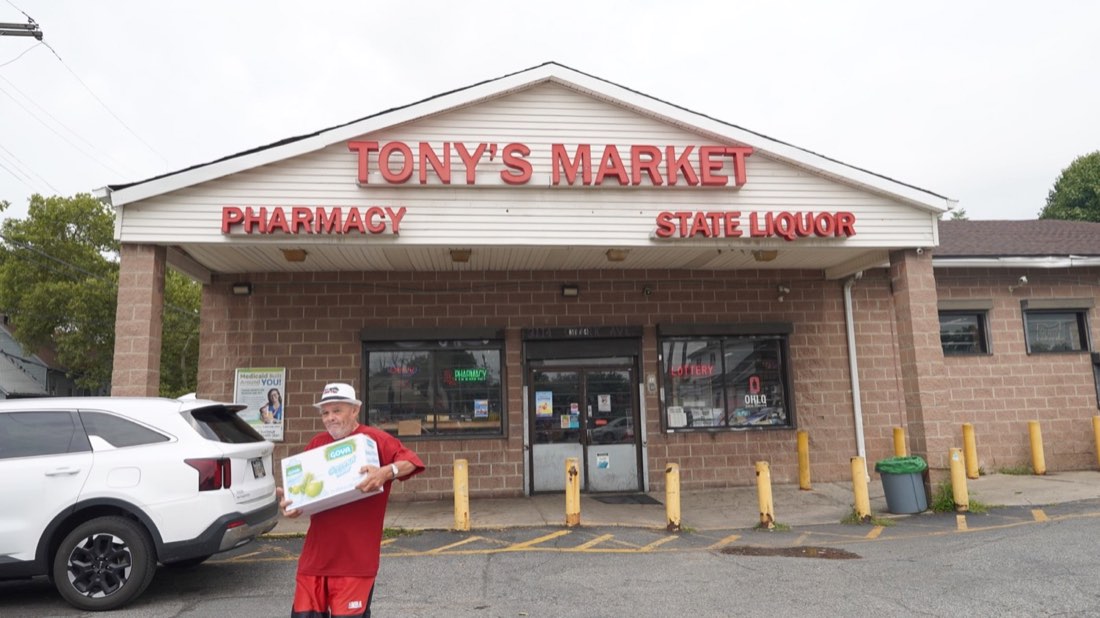
The building is not monumental. The sign is. Tony’s Market rises above Clark Avenue in large red letters, visible across a parking lot where deliveries arrive and neighbors pass one another. The architecture announces no grand theory of community. The activity does.
For Clark–Fulton, Tony’s is a reminder that neighborhood history can remain alive without standing still. Italian sausage gave way to a wider mix of Latino staples. A pharmacy joined the market. Financial services and transit passes appeared beside groceries. One practical need was layered onto another until the store became what the block required.
CLEVELAND BORICUA ORIGINAL PHOTOGRAPHY · TAKEN APRIL 18, 2022
A working corner on Clark Avenue
Three original Cleveland Boricua photographs taken April 18, 2022, document Tony’s Market and the everyday life around it.
A CLARK AVENUE TIMELINE
One market, generations of neighborhood change.
- Mid-20th centuryPuerto Rican migration grows on Cleveland’s near West Side, building the community context surrounding Clark Avenue.
- Later decadesIndependent markets become everyday anchors for groceries, medicine, conversation and familiar products.
- April 18, 2022Cleveland Boricua photographs Tony’s Market at 3114 Clark Avenue, preserving a visual record of the storefront and its customers.
- TodayThe story continues through the people who shop, work and remember this stretch of Clark Avenue.
YOU SHAPE THE NEWSROOM
What should Cleveland Boricua cover next?
YOUR CLEVELAND MEMORY
Were you there? Add your voice.
Share a memory, a correction, a family photo, or a lead for the next chapter. Every submission goes to the Cleveland Boricua moderation inbox first.
THE COMMUNITY QUESTION