CLEVELAND, Ohio — Trouble using an online bank account can turn an ordinary Monday into a stressful one. Reports involving Chase and Bank of America on November 16 have arrived alongside viral warnings about a supposed November 17 shutdown—and renewed interest in The Economist’s The World Ahead 2026 cover. The banking problems are real. A coordinated national shutdown has not been established.
News explainer and Cleveland Boricua analysis · November 16, 2026. This is a developing story. Service conditions can change after publication.
What happened at Chase—and why Bank of America is being mentioned
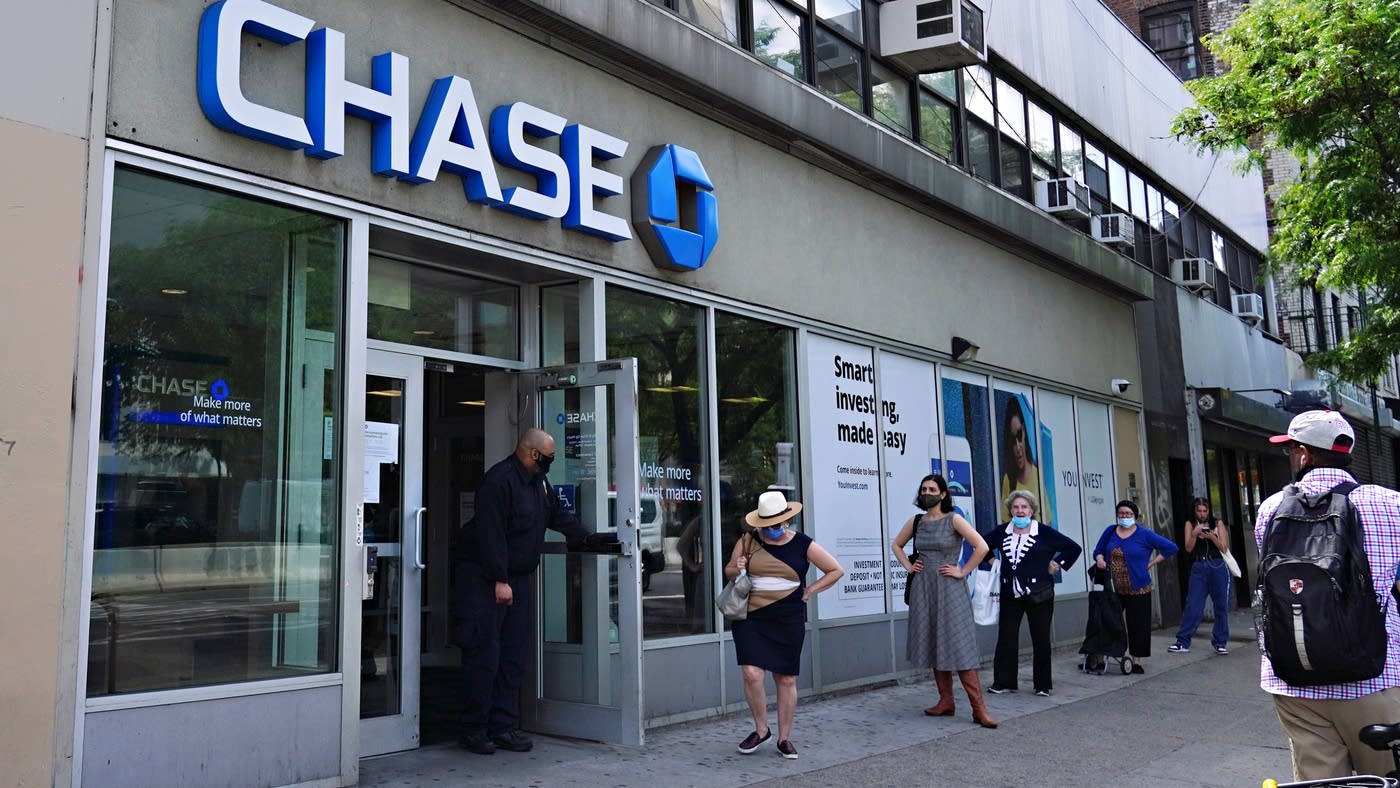
Reuters reported that JPMorgan Chase attributed transaction delays to a software bug affecting internal hardware systems. Chase said it had no evidence of a cyber-related cause and that customers retained access to accounts and funds. The bank said transactions with other institutions could be slowed when Chase was involved. Bank of America and Wells Fargo declined to comment to Reuters; U.S. Bank said its systems were not directly affected.
La Fiebre 101.7 FM
 La Fiebre 101.7 FMLa música y la voz de Cleveland.ESCUCHA EN VIVO
Forbes’ early afternoon report described more than 5,000 Chase reports and about 1,500 Bank of America reports on Downdetector around 2 p.m. Eastern. Those are reports submitted to an outage tracker, not a verified count of affected accounts or proof that each bank experienced an independent failure.
The Associated Press’ subsequent explanation distinguished Chase’s problem from delays at other banks: Bank of America and Citigroup customers transacting with Chase could experience slowness even while their banks’ own services operated. Zelle’s operator said its network was operational. AP also reported Chase expected resolution by Monday’s end; that expectation is not confirmation that service has been fully restored.
That distinction matters. A failed sign-in, an unavailable feature and a pending transfer describe different experiences. None, by itself, establishes that a customer’s money disappeared.
What is actually scheduled for November 17?
The FCC’s September 16 public notice schedules a nationwide Emergency Alert System test for Tuesday, November 17, 2026, at approximately 2:20 p.m. Eastern—Cleveland time. December 3 is the backup date. The test is intended for broadcast distribution, including English and Spanish messaging. It is a test of public warning delivery, not an announced instruction to shut down banks or the power grid.
The National Weather Service also lists the television-and-radio test. FEMA’s published FAQ, reproduced by its distribution service, says this year’s test does not include Wireless Emergency Alerts to mobile phones. Normal programming is expected to be interrupted for about one minute, with no public action required.
A government shutdown is a separate question
A federal funding lapse, a power failure and an online banking disruption are different events. The current continuing-appropriations law, Public Law 119-103, section 106, sets December 11, 2026, as its expiration date, subject to the law’s other conditions. The Senate’s legislation index likewise identifies December 11 as the funding date. Those records do not support presenting November 17 as the federal funding deadline.
Where the blackout conspiracy comes from
PolitiFact examined TikTok claims that a nationwide 90-day blackout would start November 17. It found that a circulating video appearing to show President Donald Trump announcing such a blackout had been manipulated. Its review also described posts connecting recent technology and aviation disruptions to the claim. The fact-check found no evidence establishing the forecast blackout.
The appeal of the theory is understandable: several frightening headlines close together can feel like one unfolding story. But proximity in time does not establish a common cause. Establishing coordination would require evidence connecting the systems and decisions involved—such as authenticated records or independently corroborated findings. A collage of error messages cannot supply that missing connection.
How this connects to our Economist cover article
Our earlier examination of The Economist’s 2026 cover separates documented subjects from interpretations of the artwork. That distinction applies here, too. Images associated with technology, finance or control may remind readers of a banking outage, but resemblance does not identify who caused it or establish a date.
The publisher’s November 10, 2025 launch announcement describes an annual forecast covering economic risks, geopolitics, artificial intelligence and other themes. Its stated agenda is forward-looking analysis. We found no evidence in the reviewed announcement tying Chase’s November 16 disruption to a planned November 17 shutdown. The cover is not evidence that the magazine organized or had advance knowledge of this incident.
Why Terminator 2 hits different in 2026
Cleveland Boricua cultural commentary · Video and analysis
Did Terminator predict the future, or are we just seeing the movie differently now?
Watch the reader-suggested Short below, then consider the connections—and the limits of the comparison.
Video: @TechBagTrey · Watch the original YouTube Short. Shared for cultural discussion; its inclusion does not verify the shutdown claims discussed in this article.
The shared question: who stays in control?
Terminator 2 gives viewers a dramatic fictional framework for thinking about machines and human authority. Today, names such as ChatGPT, Grok, NVIDIA and Anthropic bring AI into everyday conversation. They represent different products and companies, not one unified intelligence. The useful connection is a question about accountability: when a powerful system affects people, who can explain its decisions, correct a mistake or intervene?
Why a banking disruption makes that question feel personal
A payment delay turns an abstract debate about technology into an immediate concern about rent, groceries or a small business’s income. Banking systems also interact: as the reporting above explains, a problem involving Chase can slow transactions involving customers at other institutions. That helps explain why several bank names can appear in the same news cycle. It does not establish that AI caused the disruption or that all those banks suffered separate failures.
Where The Economist cover fits
Our earlier cover analysis discusses how images of finance, technology and geopolitical uncertainty invite interpretation. A movie about losing control, a forecast about future risks and a real banking interruption can resonate because they touch the same anxieties. This is a thematic connection. Artwork and fiction cannot establish the cause of an outage or prove that their creators knew it would happen.
Why November 17 gets pulled into the story
When a disruption arrives near an announced national alert test, the timing can make an existing rumor feel persuasive. Readers may connect the headlines before the underlying evidence connects the events. But an alert-system test, a federal funding deadline and a bank’s technical problem involve different processes. The records and reporting cited above do not establish a common operation or a planned national shutdown.
Cleveland Boricua’s interpretation: What ties these subjects together is public concern about dependence on complex systems, transparency and human control. A prolonged interruption could increase confusion, mistrust and the spread of rumors. That is a hypothetical consequence—not evidence of a conspiracy. A claim of coordination would need independently verified technical findings or authenticated records connecting the actors and events.
Perhaps the movie hits differently because our perspective has changed. The practical question for Cleveland families and businesses is whether essential technology remains reliable, understandable and accountable—and whether people can reach meaningful human help when it fails. Skynet remains fiction; this article has established no link between the banking disruption and an AI takeover or a planned November 17 shutdown.
Cleveland Boricua analysis: what a prolonged disruption could mean locally
The following is a hypothetical scenario, not a prediction or evidence of a coordinated shutdown. If banking access or transfers remained unreliable for an extended period, a Cleveland family might struggle to confirm whether a payment went through. A barber, vendor or neighborhood restaurant relying on digital payments could face uncertainty over receipts and available balances. The impact would depend on which services failed, for how long, and which alternatives remained available.
Confusion could create a second problem: people might repeat a transfer because its status is unclear, or believe a stranger offering to “restore” account access. Rumors about an imminent deadline could make rushed decisions more tempting. These are plausible consequences of uncertainty; they do not establish that anyone planned the underlying outage.
Our assessment: the strongest supported concern is how heavily everyday life depends on reliable digital systems and clear explanations when they fail. That deserves scrutiny. Claiming a secret shutdown timetable would require evidence we have not found.
What Cleveland readers can verify next
Check your bank’s own app, website or the number printed on your card for account-specific information. If a payment status is unclear, confirm it with the bank before submitting it again. Treat social-media claims about missing money or a national shutdown as claims to investigate, not instructions to act.
For this story, the unanswered questions are concrete: when Chase confirms full restoration, which services were affected, and whether further technical findings change its explanation. We have not independently audited the banks’ systems or verified a Cleveland-specific customer count. Reader experiences may help identify questions, but should be shared without account numbers, balances, passwords or security codes.