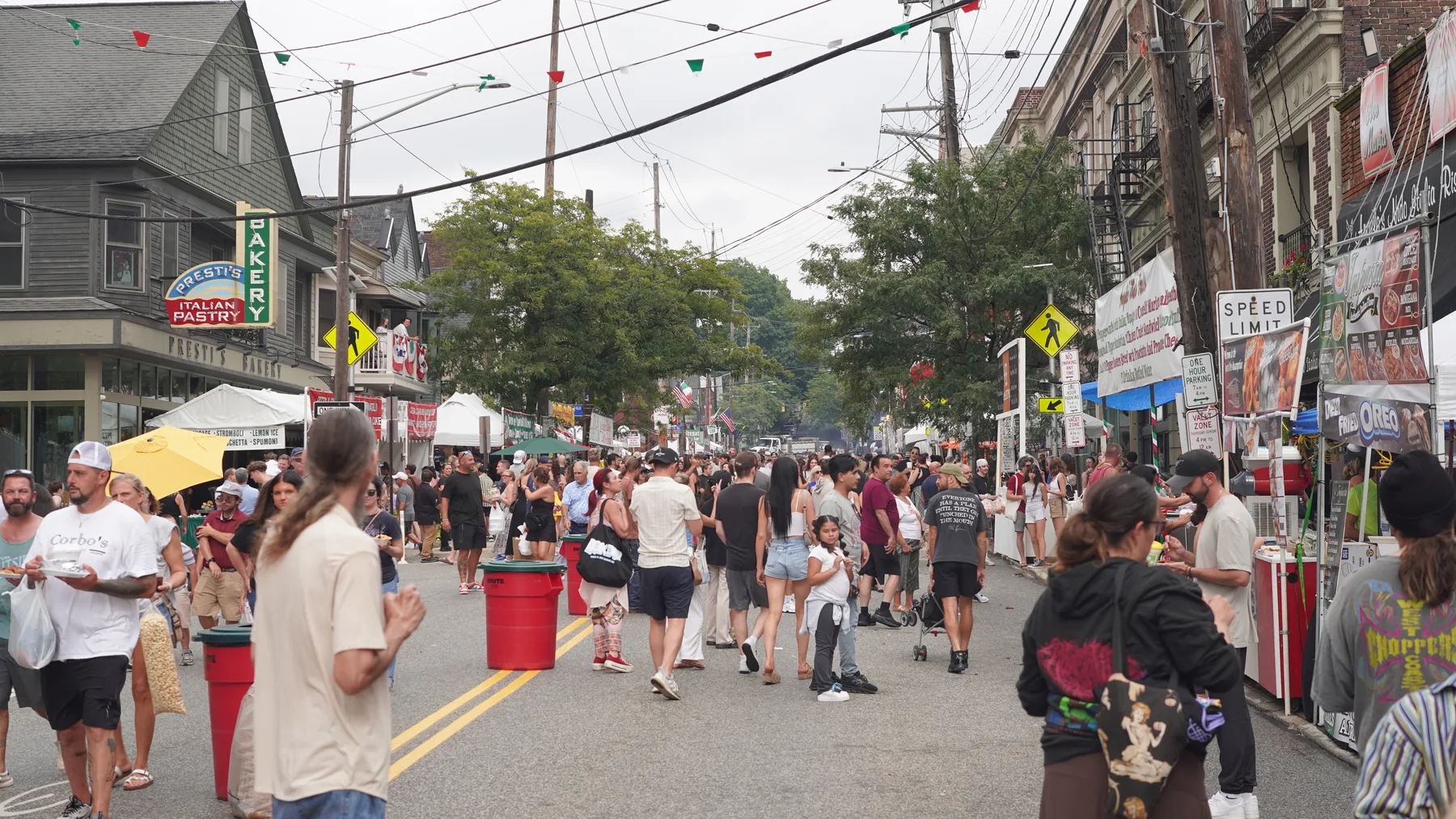
The clouds nearly wrote the headline. Then the sun came out over Mayfield Road, the pavement turned hot, and Cleveland’s Little Italy filled again with the smell of red sauce, the sound of live music and a tradition that began long before any of us arrived. To understand the 2026 Feast of the Assumption, you have to understand the neighborhood, the church its immigrants built and the generations of labor behind four public days.
Story and photography: Khristian Santana / Cleveland Boricua · Published August 16, 2026 · Jennifer Santana pictured with permission
Before the Feast, there was a new Cleveland neighborhood
Case Western Reserve University’s Encyclopedia of Cleveland History dates the establishment of Little Italy to 1885. Italian immigrants settled around Mayfield Road and Murray Hill, many finding skilled work in Joseph Carabelli’s marble and granite business, Lake View Cemetery and related stone trades. A large share came from towns in Campobasso—including Ripalimosani, Matrice and San Giovanni in Galdo—and carried village loyalties, recipes, religious customs and mutual support into a difficult new life.
La Fiebre 101.7 FM
 La Fiebre 101.7 FMLa música y la voz de Cleveland.ESCUCHA EN VIVO
By 1911, the district was overwhelmingly Italian-born or the children of Italian immigrants. The neighborhood was not created as a tourist attraction. It was a working immigrant community where the church, shops, societies and family networks helped newcomers find work, learn the city and care for one another.
A church the community built for itself
The Feast cannot be separated from Holy Rosary Church. Italian Catholics first traveled downtown to St. Anthony of Padua, but the distance was difficult for the growing colony. Mass was being offered locally at D’Errico Hall by 1891. Holy Rosary parish formally began on January 5, 1892, and residents reportedly raised $2,000 in one month toward their own church. The cornerstone was laid that August; the first building was completed only months later. Construction of the present church began in 1901 and it was dedicated in 1909.
Holy Rosary was more than a Sunday destination. Historical accounts document citizenship and job-skills assistance, a school, athletic programs and even a medical dispensary. It gave the neighborhood a place to worship, organize and solve problems together. That history explains why the Feast still feels like an extension of the parish rather than a festival simply dropped onto a street.
Before and now: a living Cleveland timeline
- 1885Little Italy takes shape around Mayfield Road, Murray Hill and the stone trades.
- 1892Holy Rosary parish is established after local families raise money for a neighborhood church.
- 1898Holy Rosary hosts the first Feast of the Assumption in Cleveland Little Italy.
- 1909The present Holy Rosary church is dedicated.
- After the 1970sThe Feast increasingly welcomes visitors beyond the Italian and Catholic communities while retaining its Mass and procession.
- 2020The street festival is canceled during the pandemic, but organizers preserve the holy day’s religious meaning.
- 2021The full celebration returns, reminding volunteers how deeply Cleveland missed gathering together.
- 2026The official 127th Feast brings four days of worship, processions, food, music and neighborhood reunion.
How a holy day became a Cleveland homecoming
Holy Rosary has hosted the Feast since 1898 in honor of the Catholic Assumption of Mary, observed on August 15. Its center is the solemn Mass and procession through Little Italy, historically carrying an image of Mary through the streets as worshippers pray and make offerings. Those donations helped support the parish, its programs and charitable work.
Food and celebration grew around the observance. A Cleveland State University history describes the traditional cavatelli meal after the procession and a large volunteer operation that historically required roughly 300 people to manage rides, games, pizza and cavatelli. By the later twentieth century, the event had expanded into one of Cleveland’s best-known ethnic celebrations without losing its religious core.
The Feast also grew beyond one identity. Cleveland Historical notes that after the 1970s more visitors who were neither Italian nor Catholic came to participate. That change did not erase the origin. It made the neighborhood’s story public: a faith tradition created by immigrants became a gathering place shared across Northeast Ohio.
Organizer voices across the decades
Archived voices show that organizers have long understood the event as work with a purpose. John Peca, a Feast program chairman for two decades, described its power in one sentence: Most important it gives us all a sense of pride and accomplishment.
Former pastor Father Joseph Valentini also explained that Feast proceeds supported the church and school, with hopes that the celebration could help fund new services and draw younger families back toward the neighborhood.
After the pandemic interruption, longtime volunteer coordinator Tammy Moore summarized the returning Feast with three essentials: faith, family, food.
Her point matters. The order begins with faith, but family and food turn belief into something people can experience together.
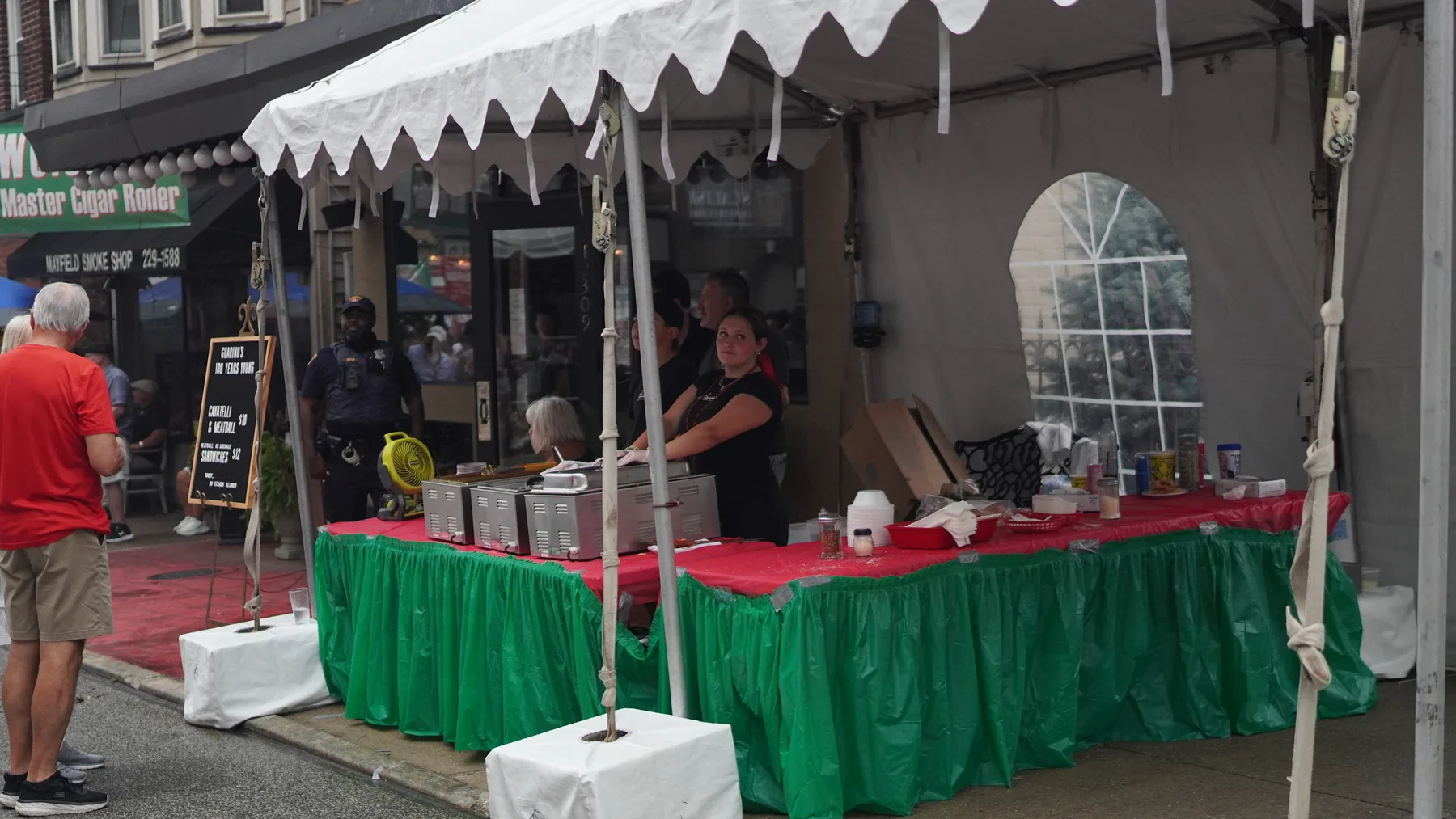
Modern restaurant operators describe the same commitment in practical terms. During the 2025 Feast, Guarino’s reported preparing hundreds of gallons of red sauce and hundreds of pounds of meatballs, sausage and cavatelli. Operating partner Scott Phillips said, It’s not about the money; it’s more about the experience.
That attitude helps explain why staff, volunteers and families accept an exhausting week: they are serving memory as much as dinner.
Why four days require months of work
Visitors see tents, music and packed sidewalks. Organizers see permits, street closures, electrical service, food safety, deliveries, sanitation, waste removal, emergency access, volunteer schedules, church services, entertainment changes, cash handling, crowd movement and weather plans. Restaurants must estimate demand without knowing exactly when a rain cloud will slow a line or when sunshine will send thousands of people onto Mayfield Road at once.
The City of Cleveland’s published operating information for earlier Feasts shows the scale: road closures and parking restrictions, heavy traffic, transit guidance and increased public-safety staffing. In 2020, city and church leaders canceled the street festival because the tight neighborhood could not safely support its normal crowd during COVID-19. Preserving the Mass and procession while pausing the commercial celebration showed what organizers consider essential—and how seriously they carry responsibility for the public.
Then there is the invisible labor. Parish volunteers prepare churchyard booths and services. Restaurant crews order ingredients, cook, clean and repeat. Musicians, technicians and vendors coordinate arrival times inside closed streets. Safety teams keep routes open. Cleanup crews restore a residential neighborhood after the crowd leaves. A Feast that feels effortless to a visitor is usually the result of hundreds of people solving problems before the visitor ever arrives.
Why Cleveland still needs the Feast
Little Italy has changed. The neighborhood now includes longtime families, restaurants and galleries alongside students, medical workers, new residents and development tied to nearby University Circle. Historical estimates show that the area is less uniformly Italian than it once was. That makes the Feast more necessary, not less: heritage no longer survives automatically through geography. It survives because people deliberately teach it, cook it, sing it, pray it and invite others inside.
Cleveland needs public traditions where history is not locked behind glass. At the Feast, a family recipe becomes a conversation. A procession makes belief visible. A child sees grandparents return to the same block. A visitor who has no Italian ancestry can still understand what it means to build a home far from the one your family left. Local businesses receive an intense burst of attention, while the parish renews the relationships that sustain its ministry year-round.
There is also a simple civic need: people need reasons to gather face to face. The Feast creates temporary common ground among generations, neighborhoods and backgrounds. It does not solve every challenge facing Cleveland, but it demonstrates a useful answer—show up, make room, share what your family knows and do the work together.
In 2026, the weather almost changed the story
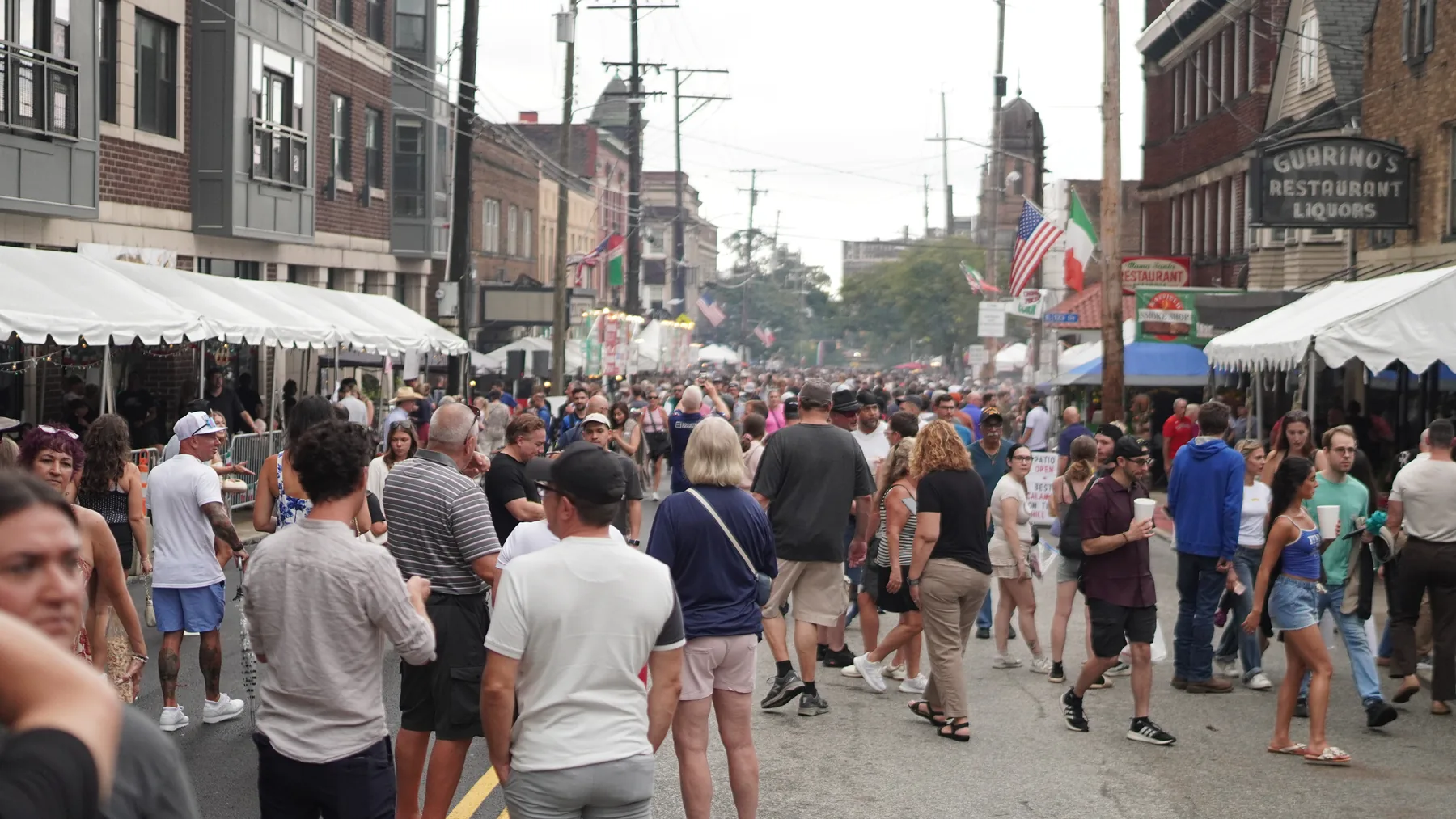
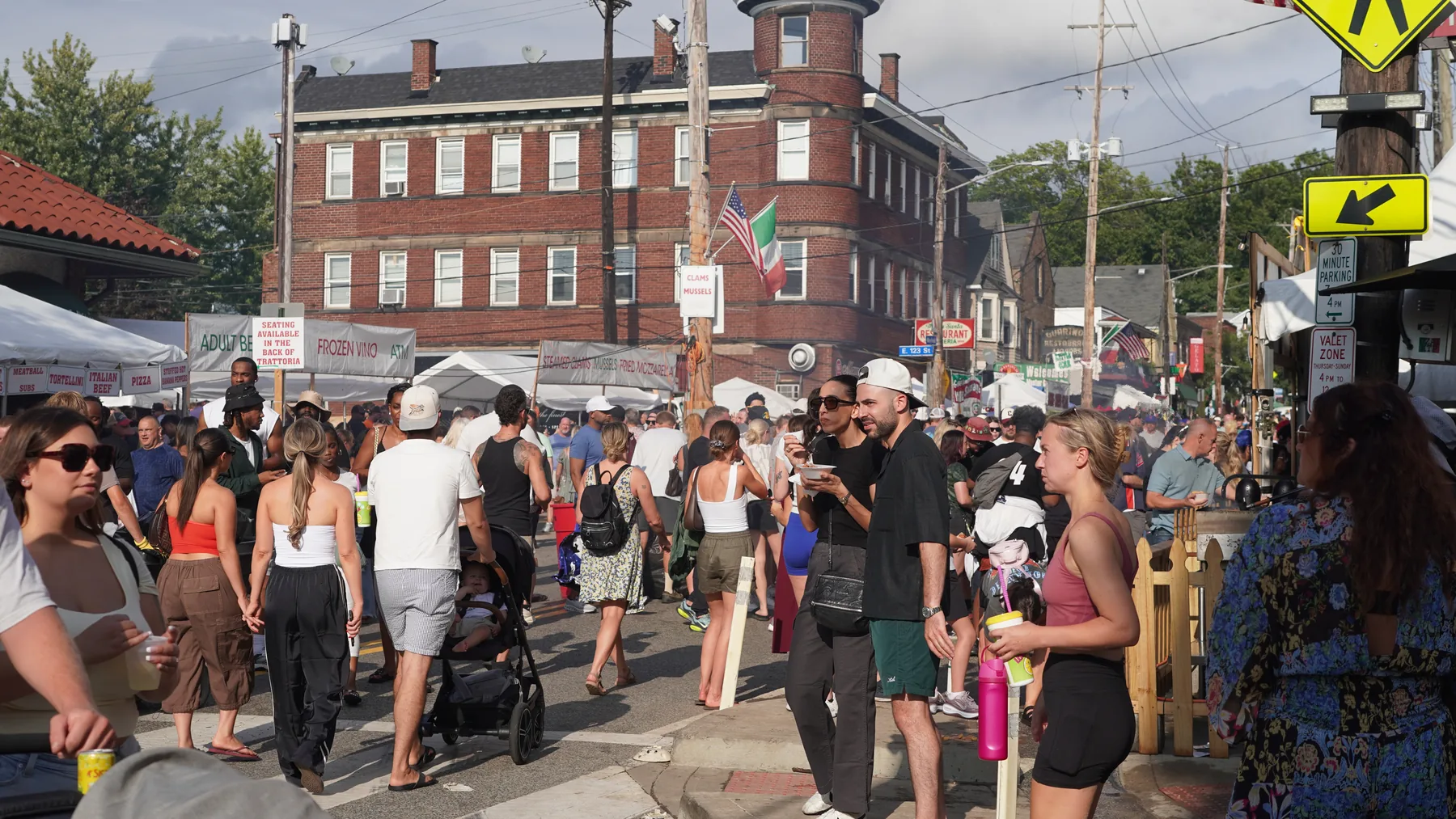
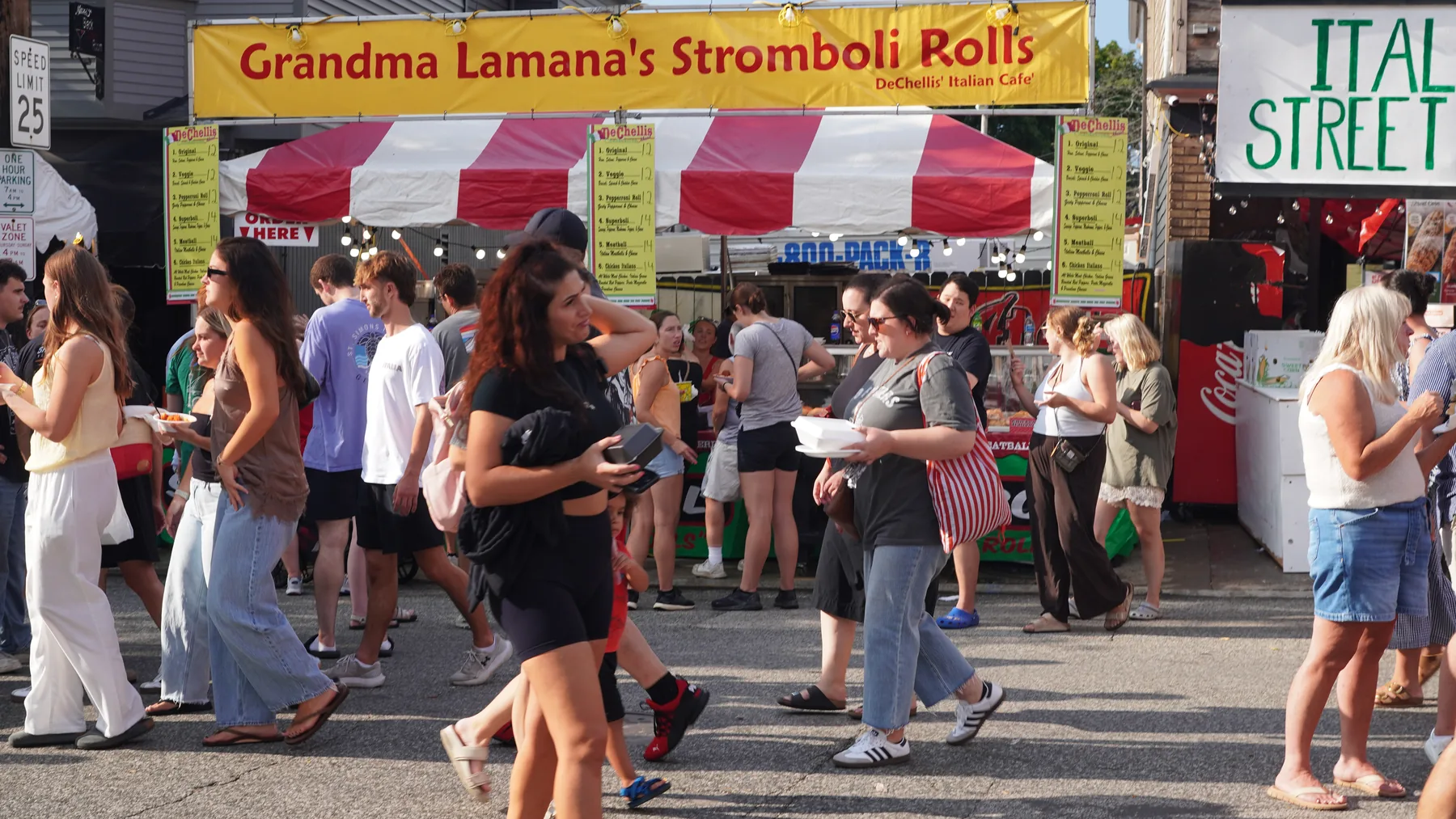
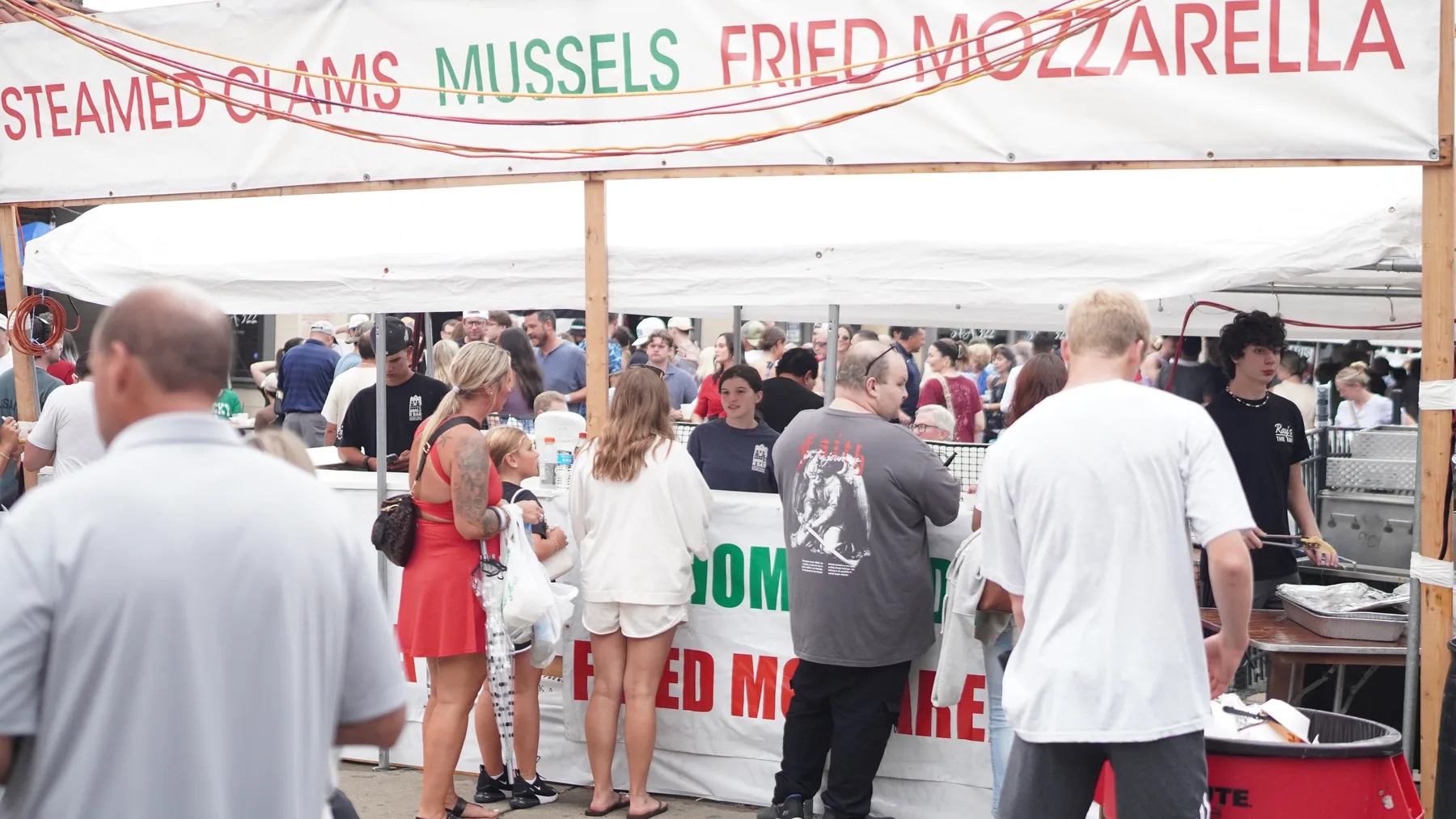
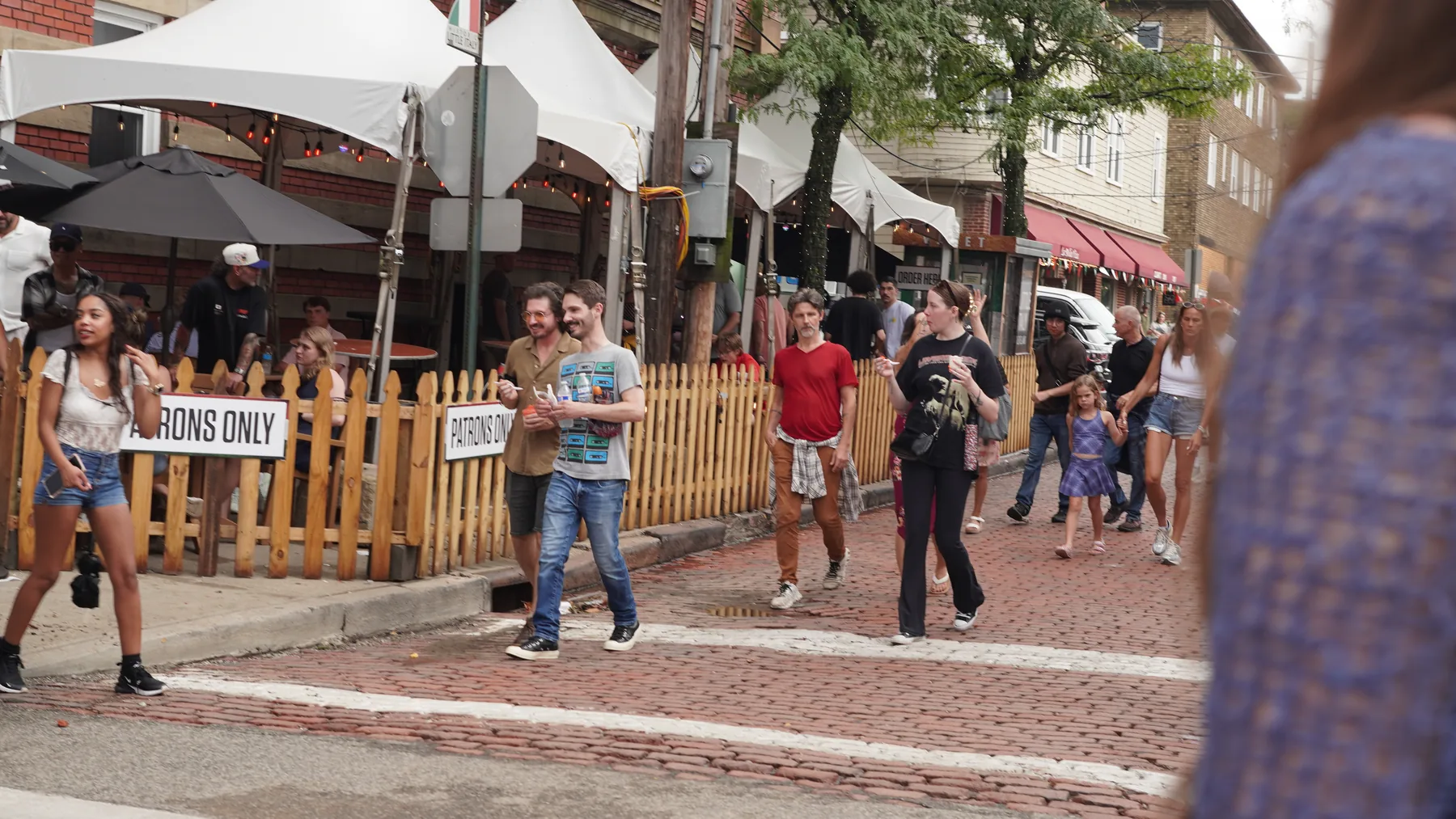
At first, gray skies and the threat of rain made it feel as if the weather might steal the moment. Tents became shelter, visitors watched the clouds and every vendor kept one eye on the sky. Then the sun broke through. The streets brightened, the crowd grew and the day turned hot fast—one of those Cleveland reversals that makes the final sunshine feel earned.
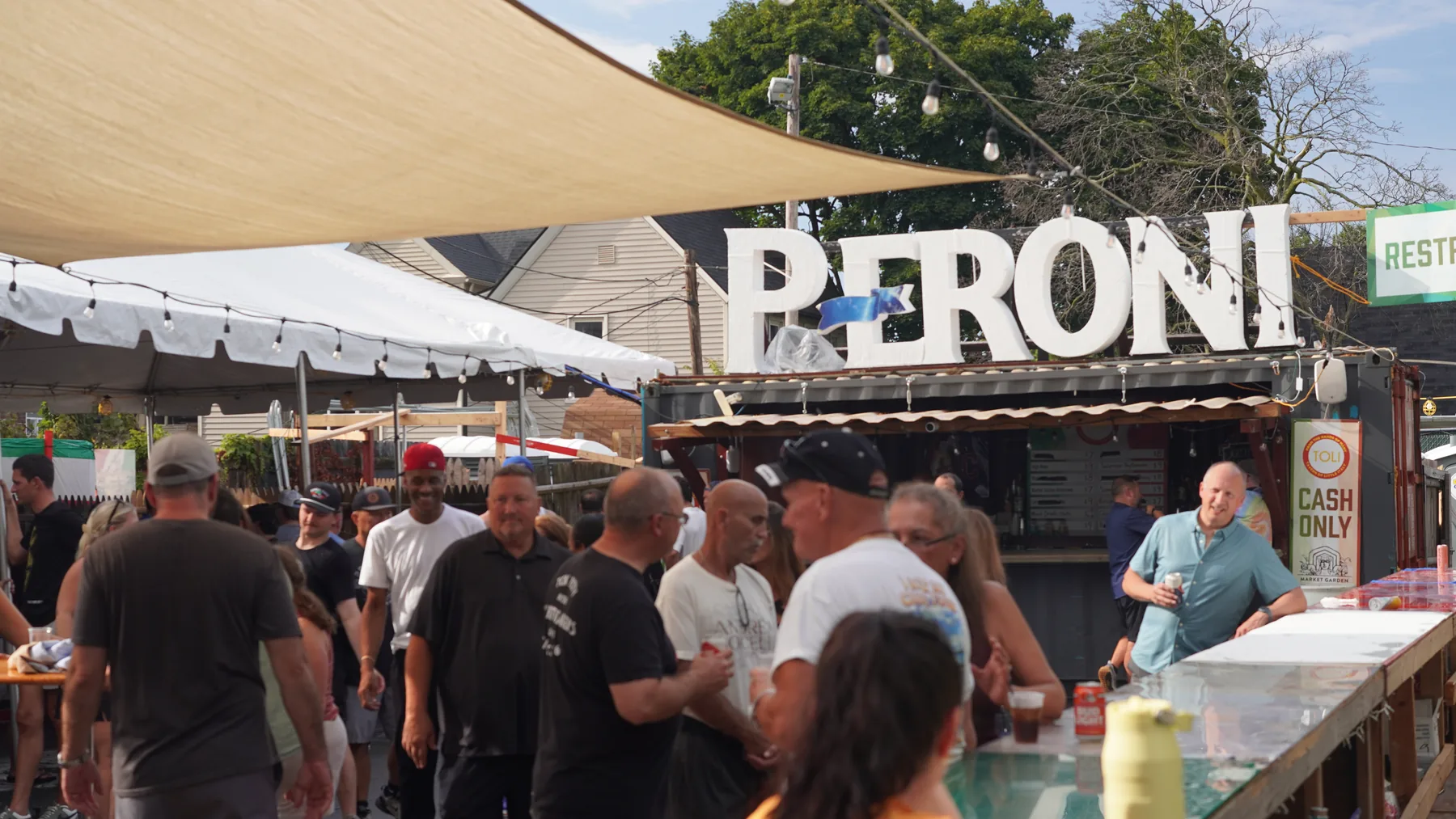
By afternoon, Mayfield Road was full again. Cold drinks became essential, lines reached into the street and every open patch of shade became valuable. The weather did not ruin the Feast. It gave the day a beginning, a turnaround and a finish worth remembering.
What makes one tent your tent?
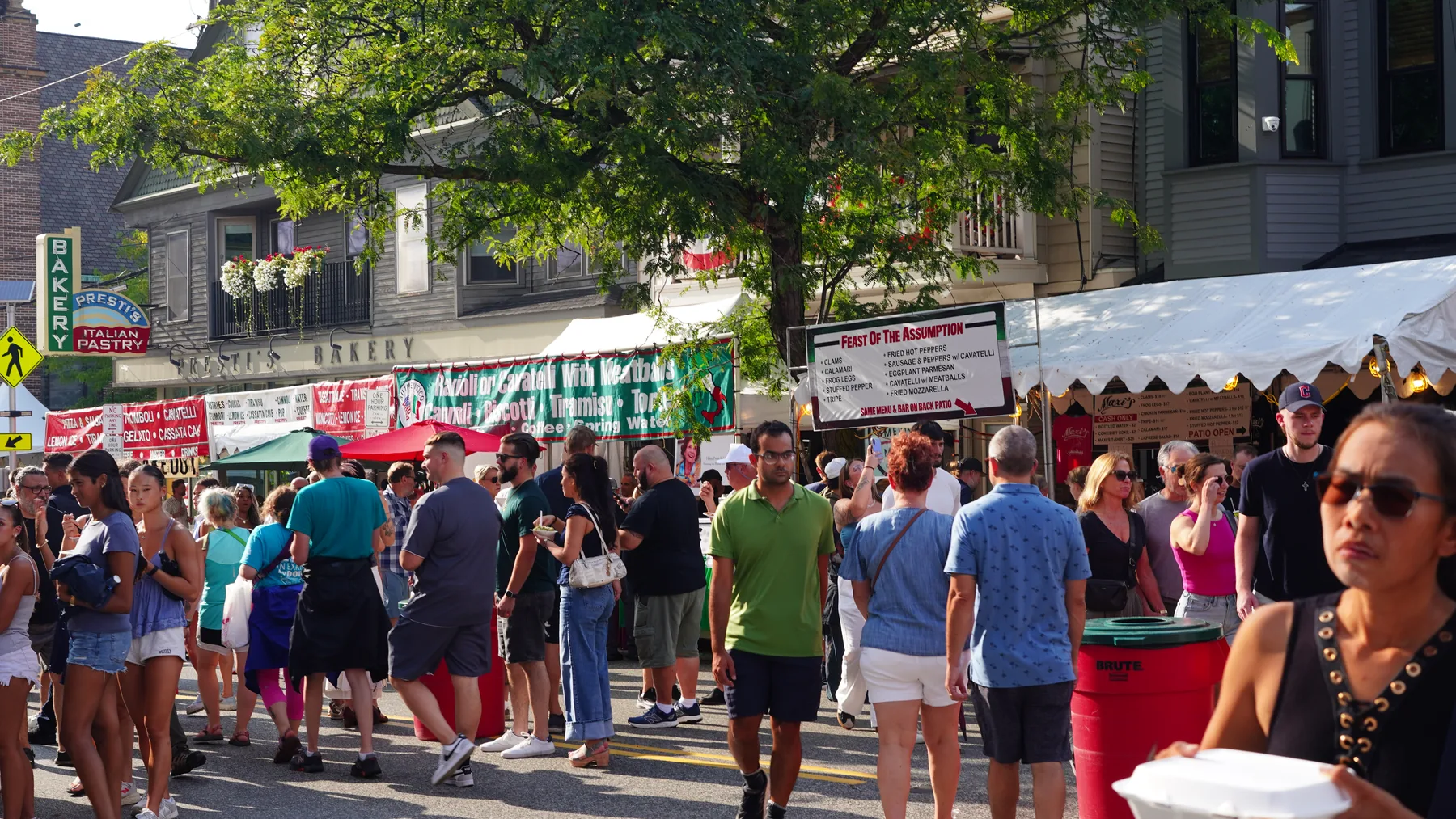
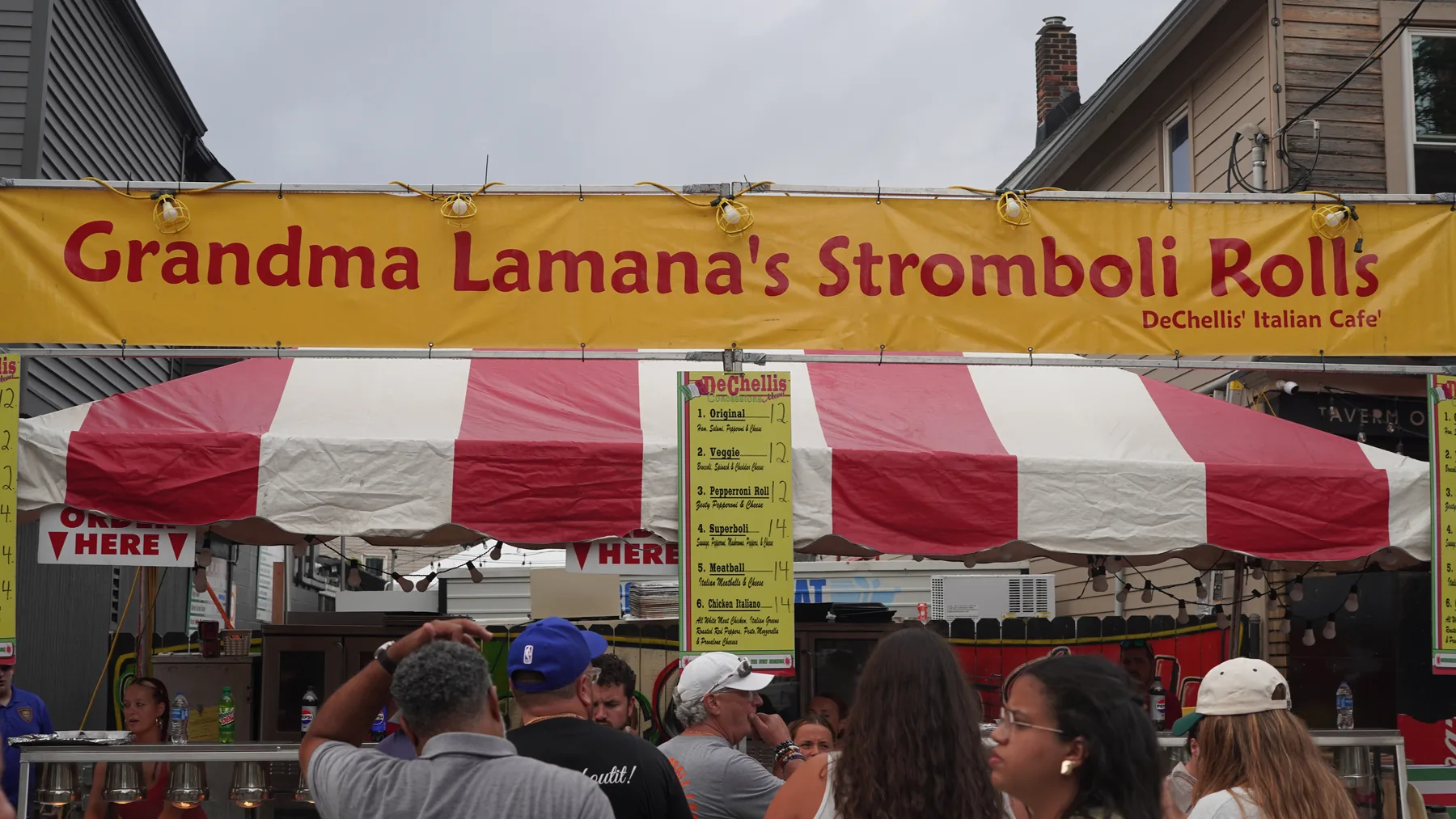
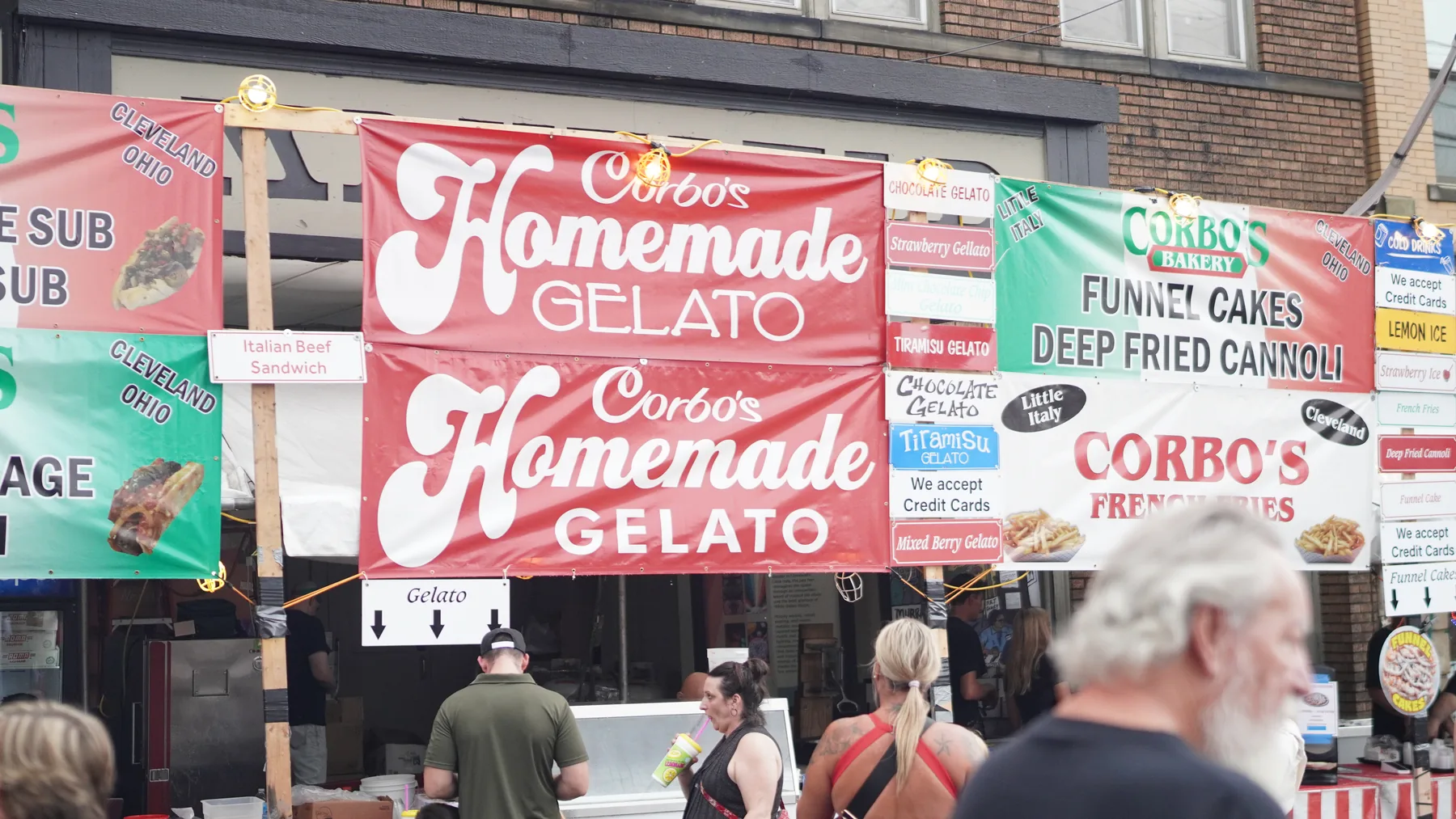
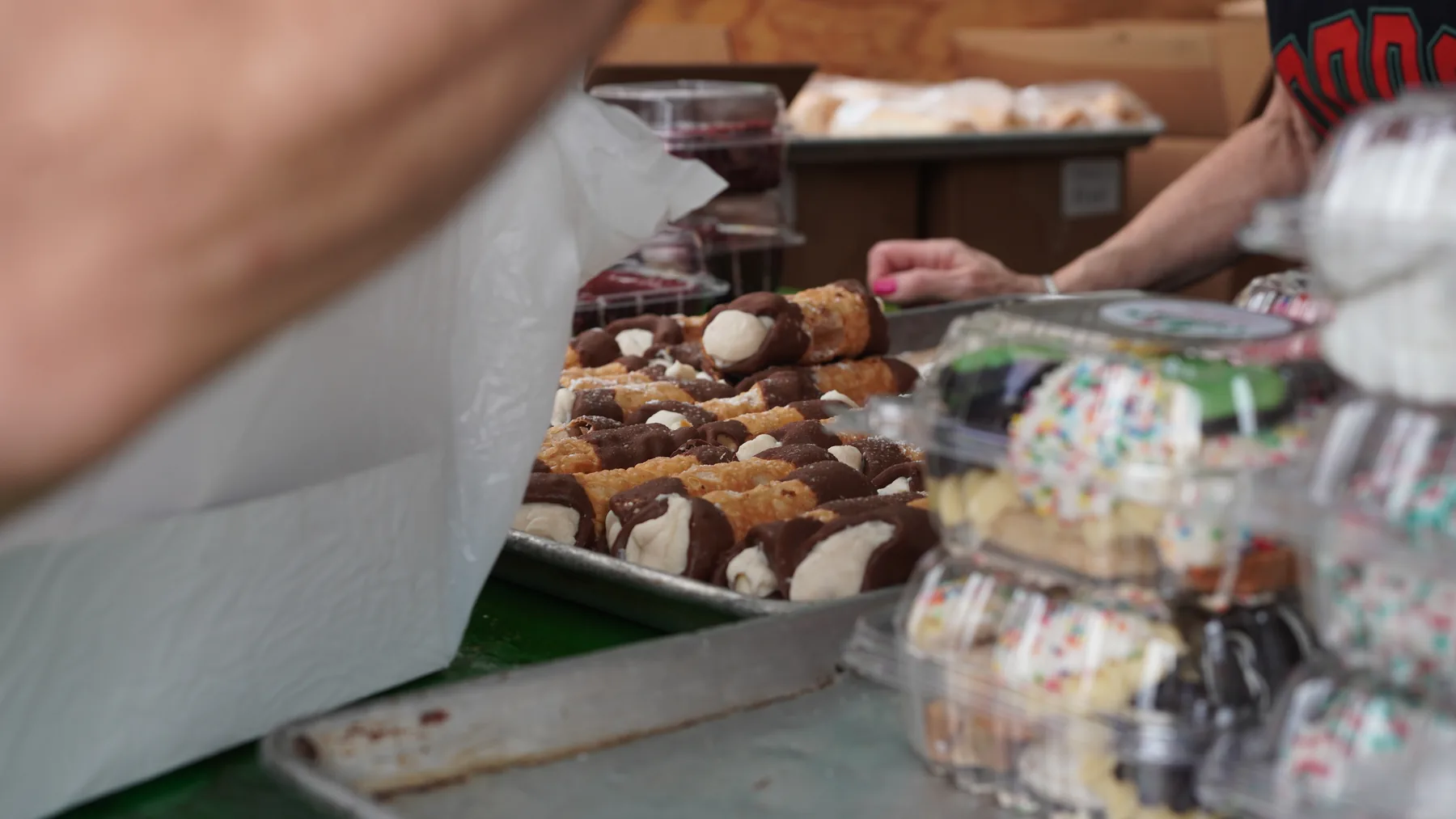
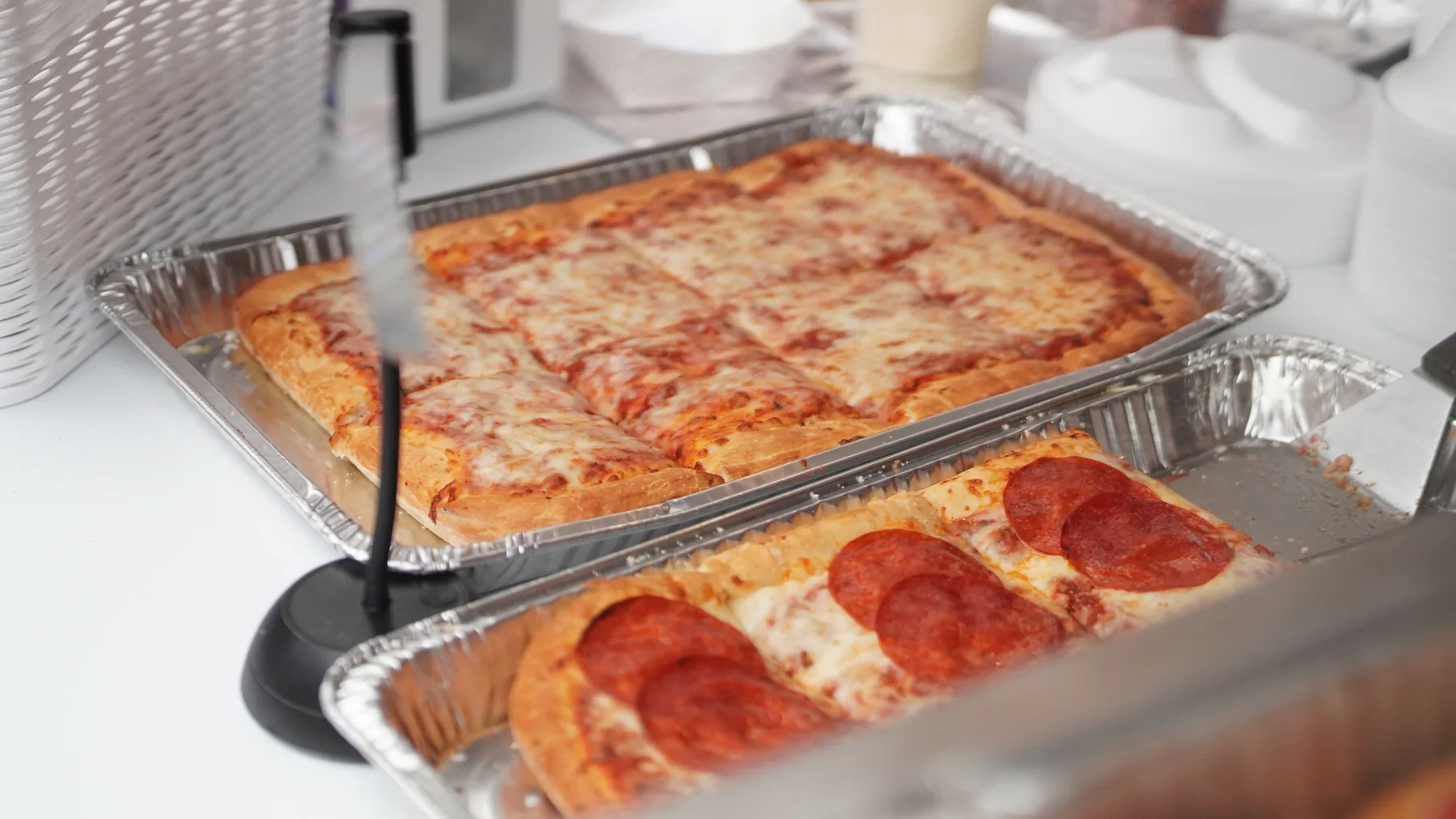
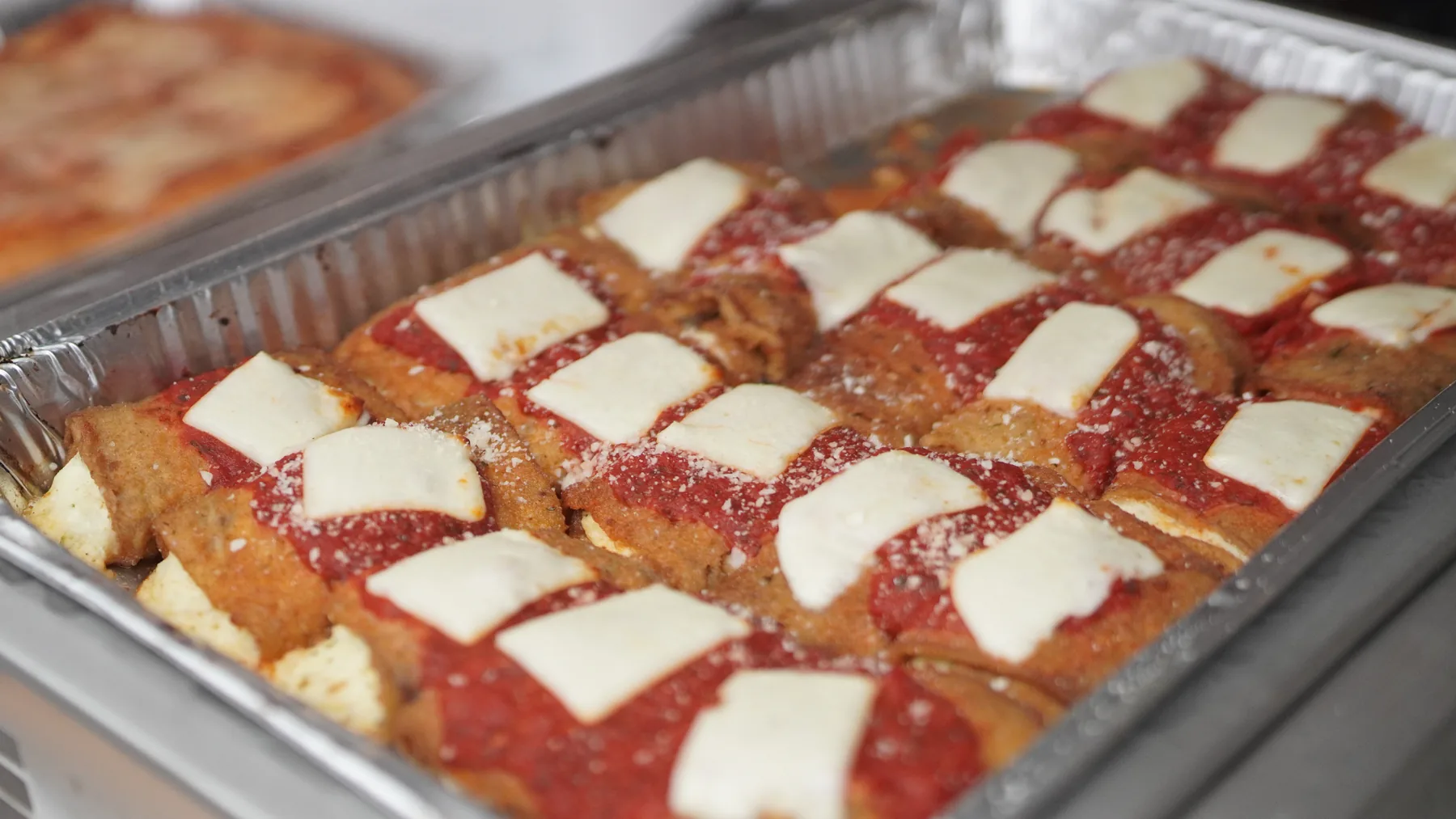
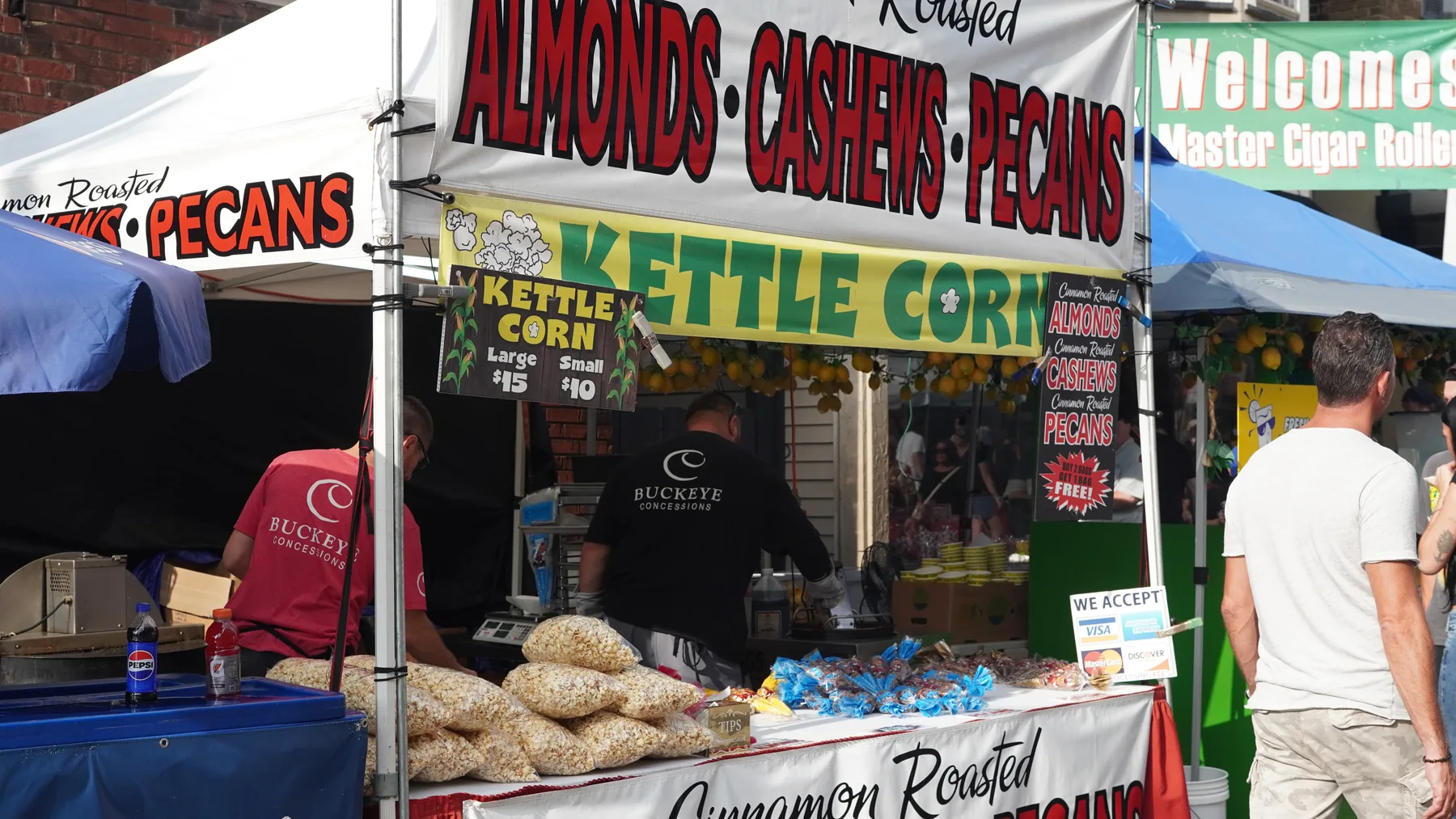
Everyone has a Feast routine. Maybe you go straight to Grandma Lamanna’s stromboli rolls, start with pizza, wait for cavatelli, search for fried mozzarella or save your appetite for Corbo’s gelato and cannoli. Some families return to the same restaurant because the people remember them. Others follow the longest line because a crowd is its own recommendation.
Which tent did you love most? Where do you eat every time—and what makes it the best spot? Is it the sauce, the recipe, the welcome, the patio, or the memory of who first brought you there?
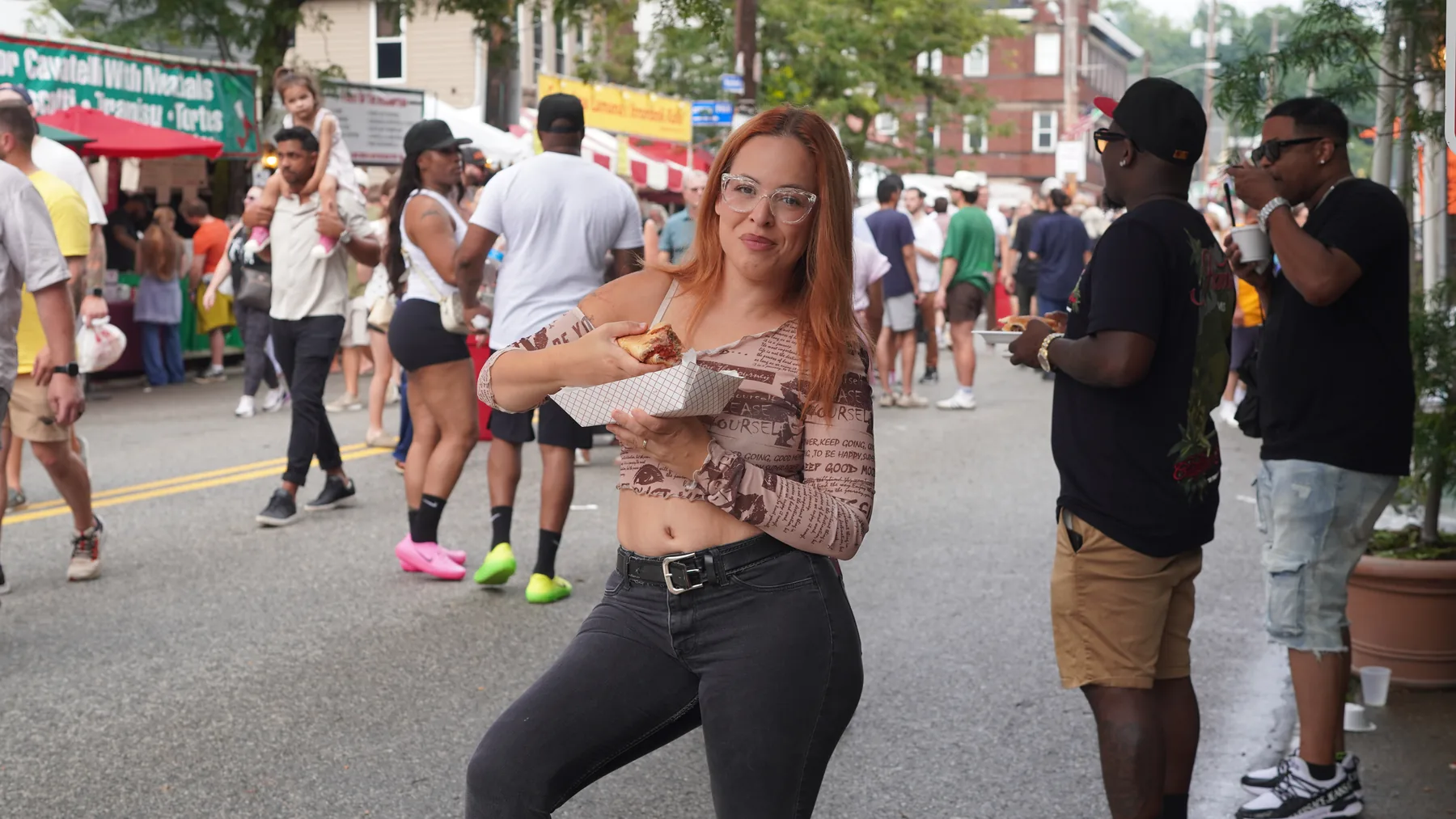
Cleveland Boricua’s must-have bite
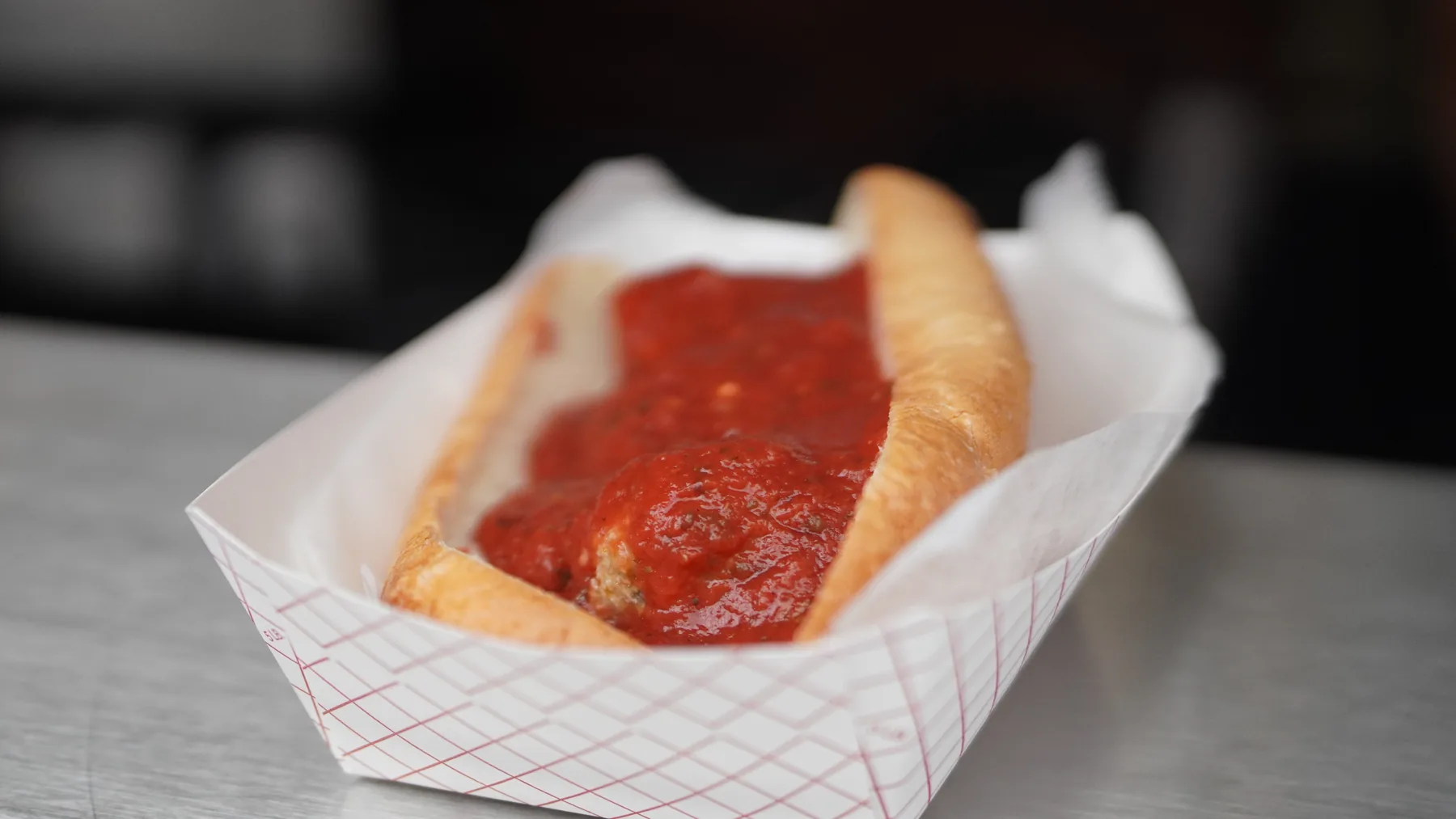
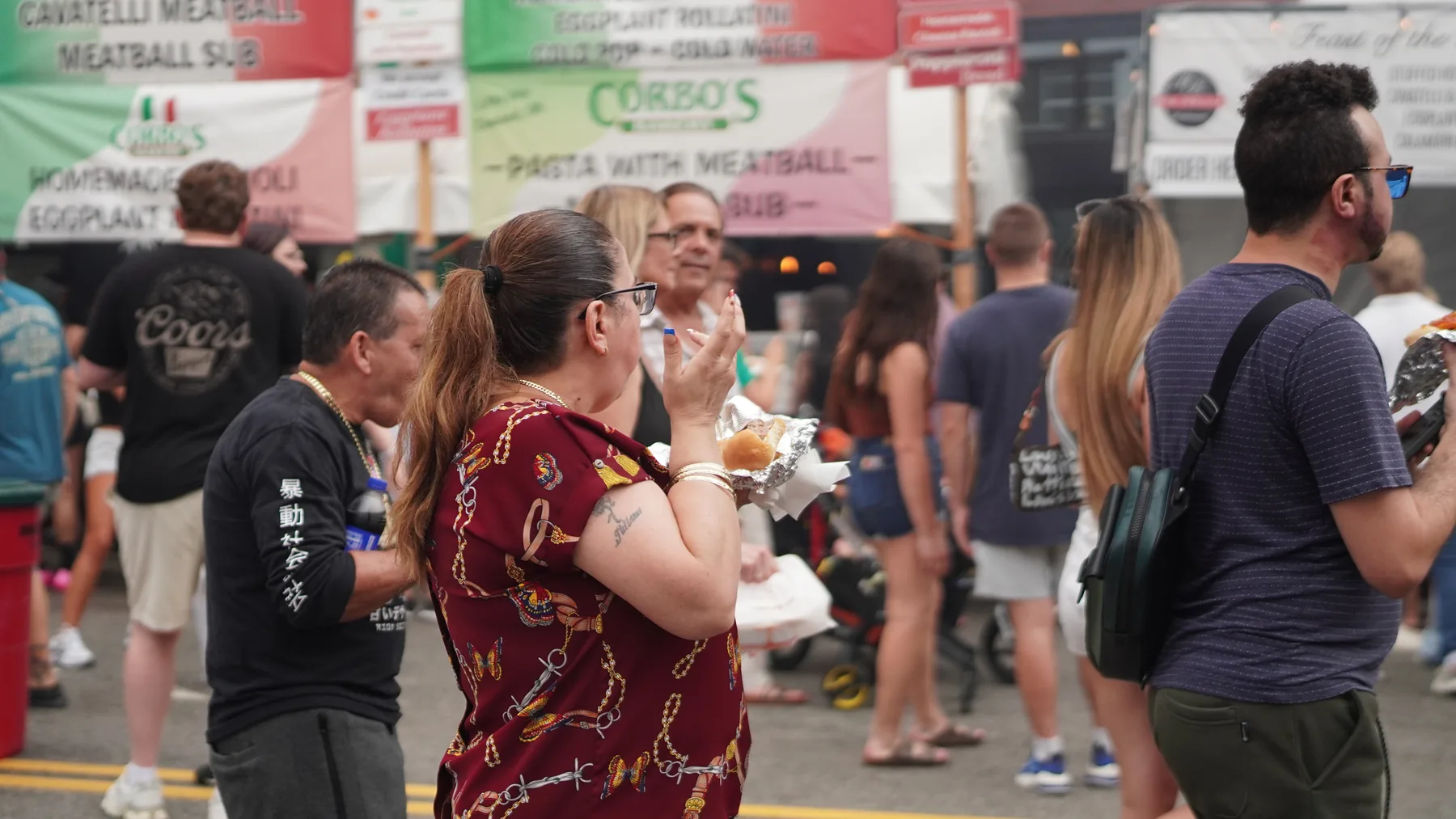
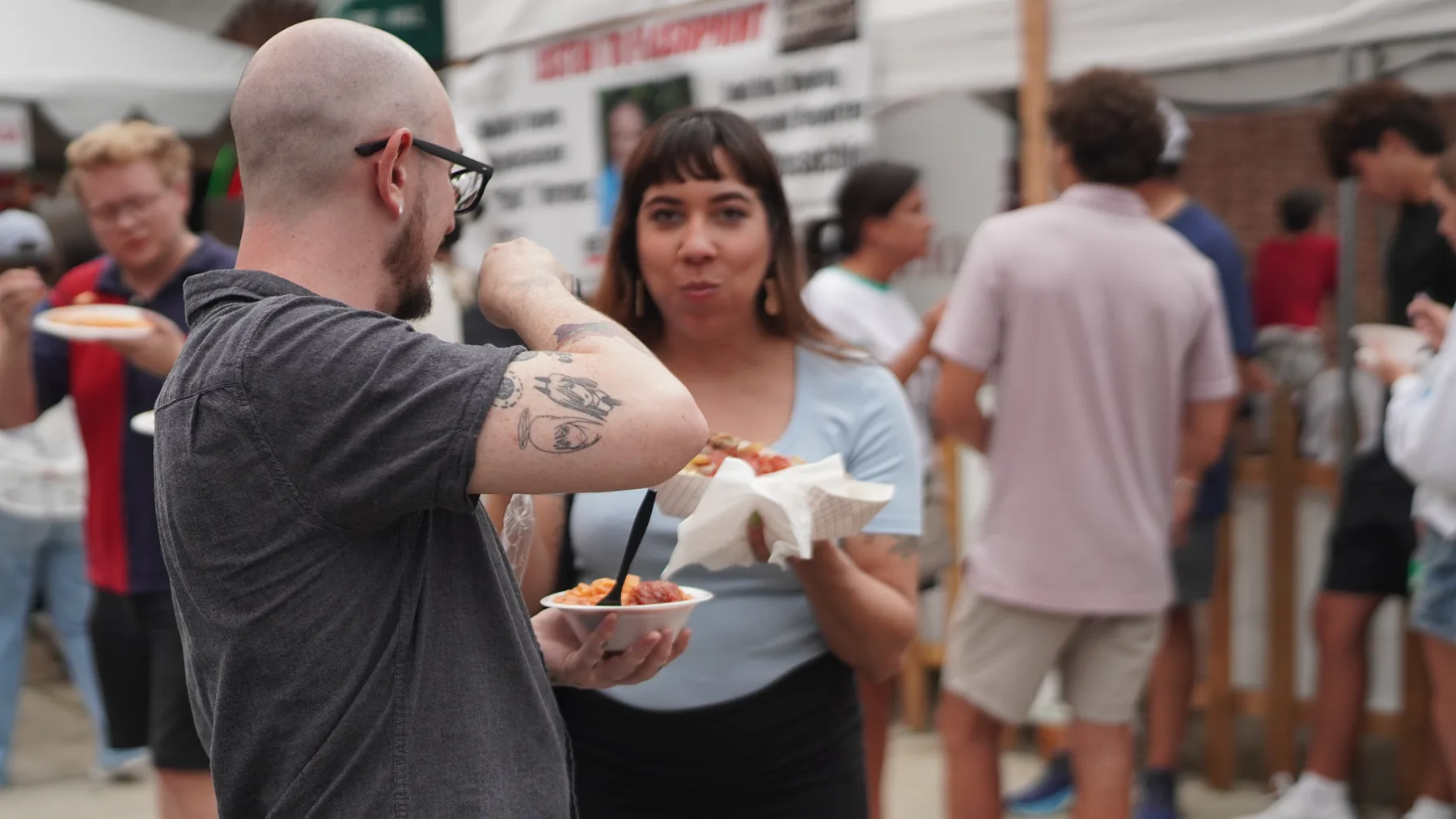
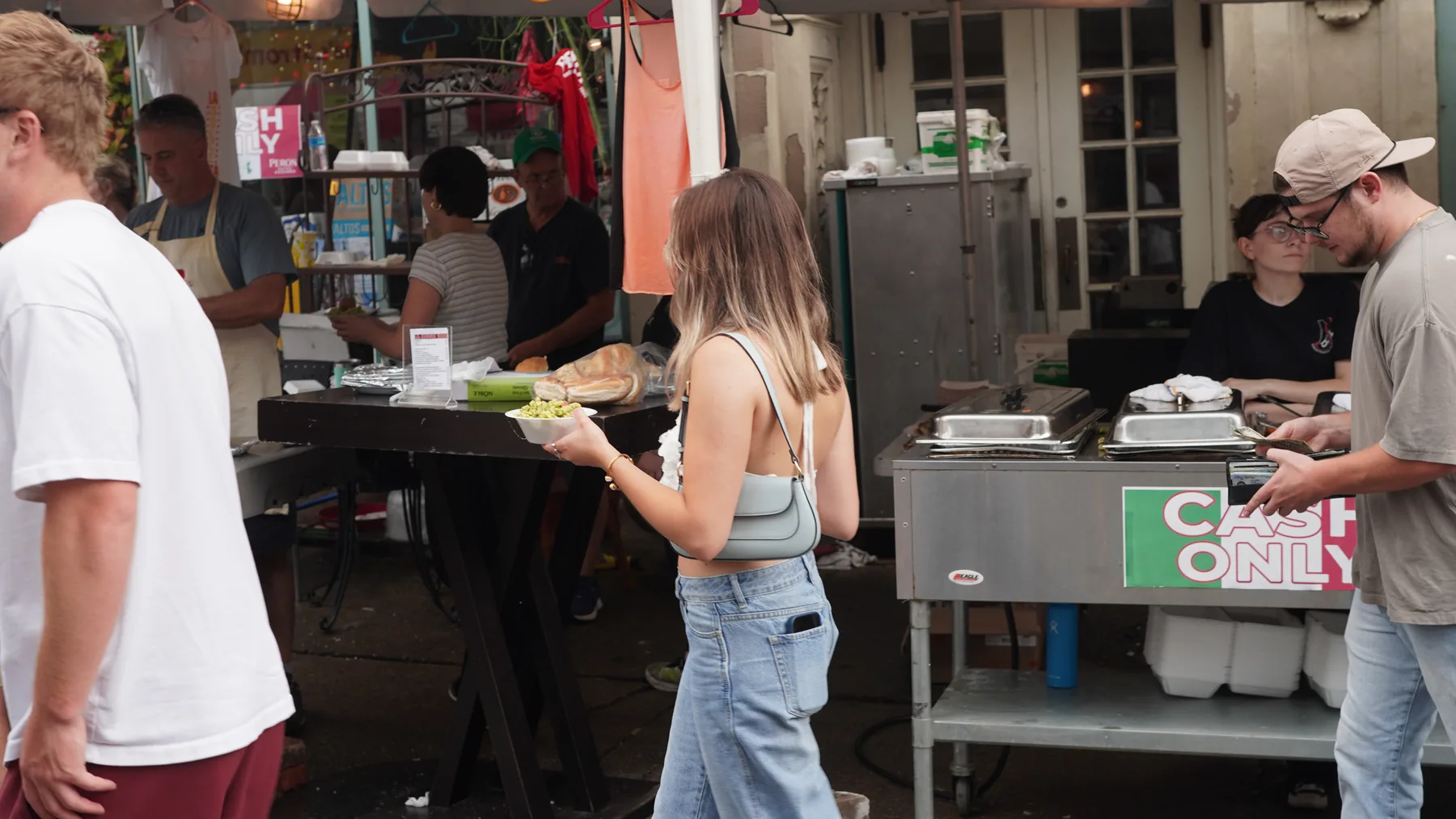
For Cleveland Boricua, the meatball sub is not a side stop—it is part of attending. A soft roll, meatballs and plenty of red sauce, eaten while standing in a moving festival crowd, can hold the flavor and comedy of an entire afternoon. Jennifer Santana’s meatball-sub moment captures the real value of food tradition: the bite matters, but so does the person who shared the day with you.
Did you stay for the final song?
The official 2026 schedule paired Masses and processions with performers including Dan Ricci, the Primavera Band, the Italian Band of Cleveland, The GoodFellos with Dennis DeSapri, G4, Nick Costa and Company, the Avanti Band and Swamp Boogie. Did you stay until the end? Did you stop for a live performance, or did the music follow you while you searched for one last bite?
YOUR FEAST STORY
Tell us what won your day
CLEVELAND BORICUA PHOTO STORY
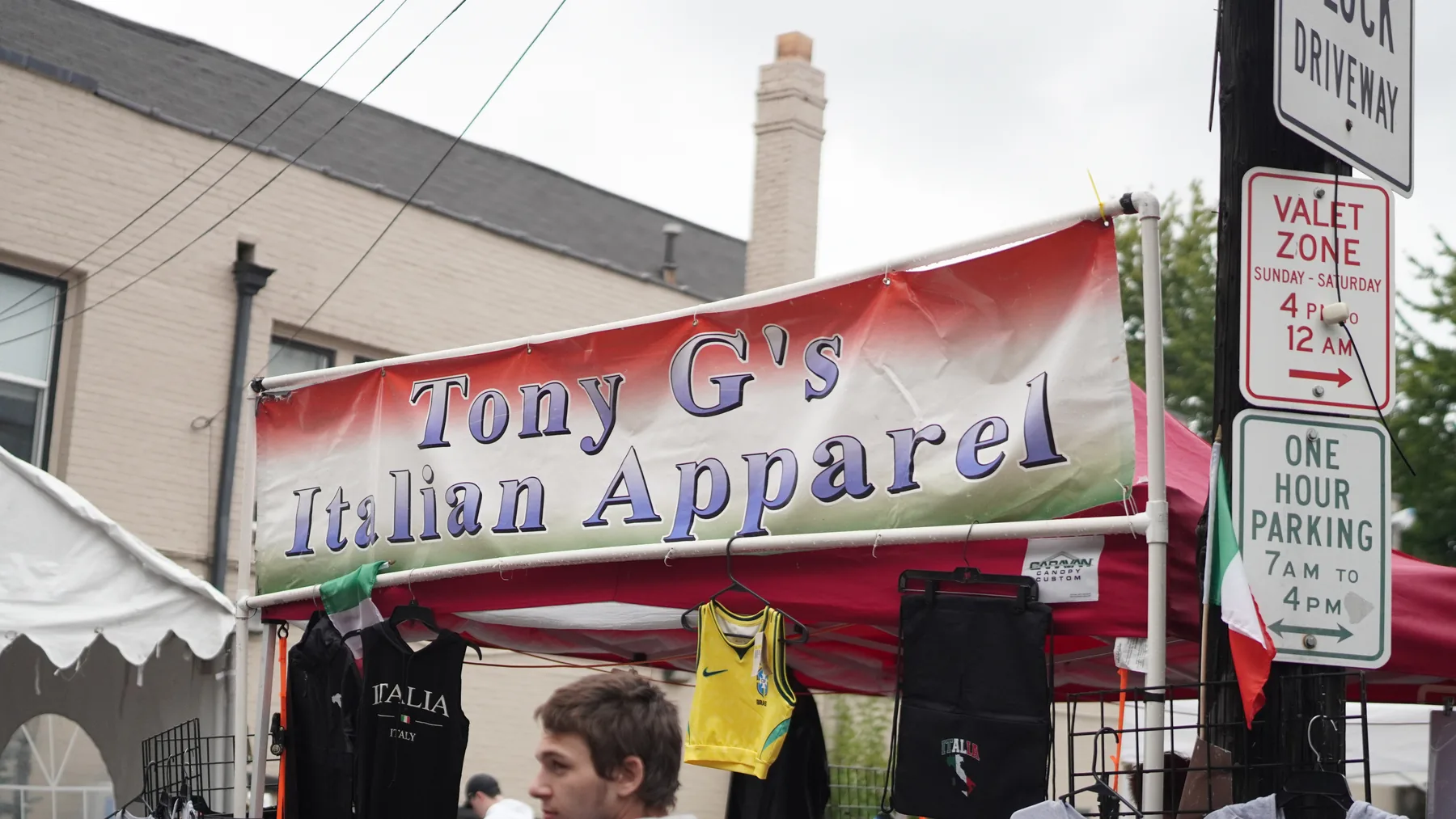
Food, crowds and sunshine in Little Italy
Use the arrows or dots to explore all 21 photographs. Every image is credited to Khristian Santana / Cleveland Boricua.
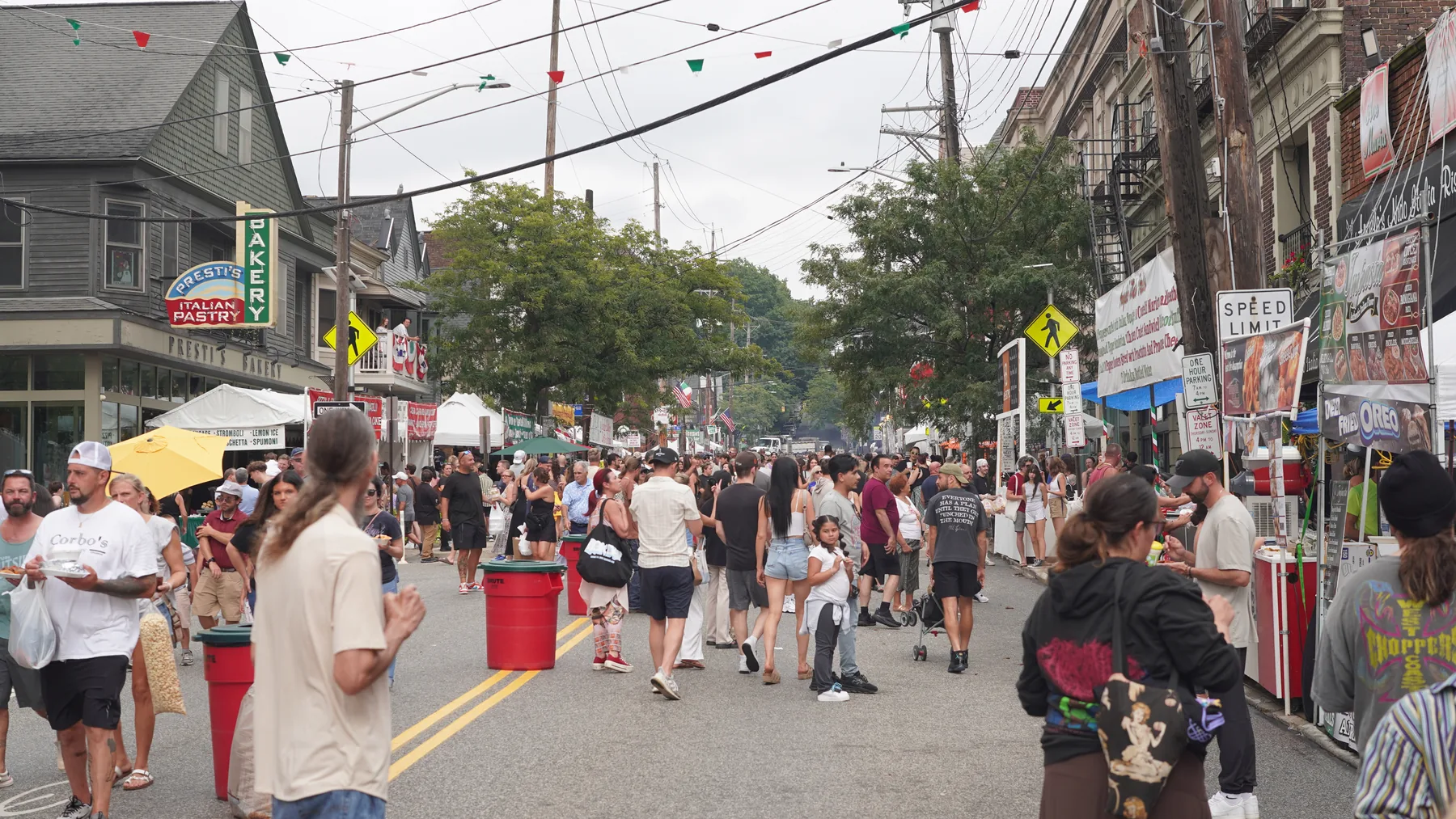
Credit belongs to the people who keep it alive
Cleveland Boricua credits Holy Rosary Church, its clergy, Feast committee, organizers and generations of volunteers; Little Italy residents and businesses; every cook, server, vendor and musician; city, transit, public-safety and sanitation workers; and visitors who supported the neighborhood. We thank Jennifer Santana for sharing the Feast—and the meatball-sub photograph—with our readers.
Historical credit also belongs to the immigrant families who built the parish, the parishioners who protected its religious center and the organizers who adapted the event through demographic change, development, weather and a pandemic. Tradition survives because people choose to show up and accept the work of passing it forward.
YOU SHAPE THE NEWSROOM
What should Cleveland Boricua cover next?
YOUR CLEVELAND MEMORY
Were you there? Add your voice.
Share a memory, a correction, a family photo, or a lead for the next chapter. Every submission goes to the Cleveland Boricua moderation inbox first.
THE COMMUNITY QUESTION